
SMALL SPACE PLANNING WITH A TETRIS MINDSET
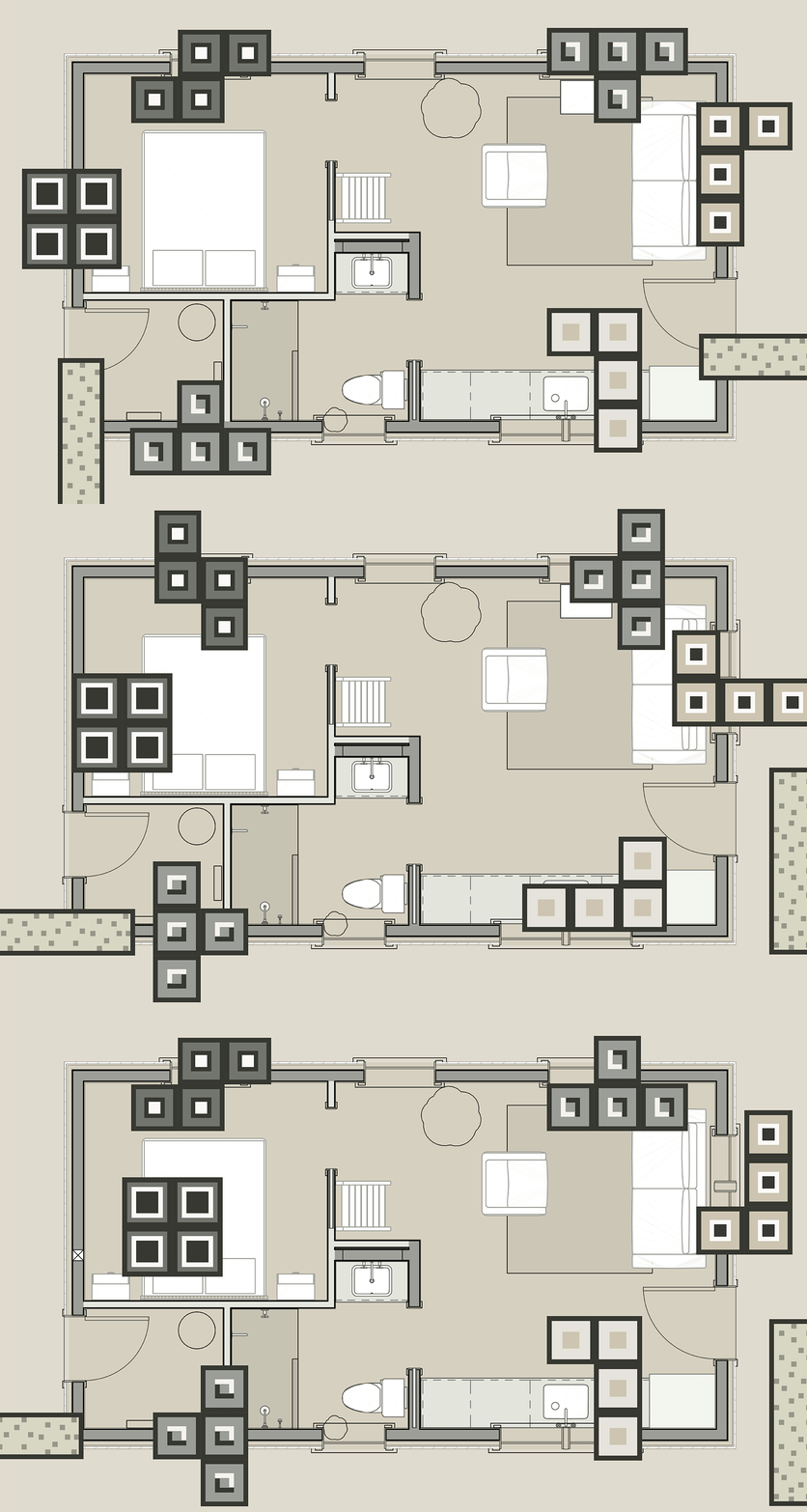
Steep Hill Heirloom Sleeping Cabin Floor Plan with Tetris blocks.
Space planning is a lot like a game of Tetris. Success hinges on each element fitting together cleanly, without wasting blocks of space. Hallways, oversized rooms, and underutilized areas are equivalent to gaps in the Tetris stack. In small space design, this is particularly true; decisions compound quickly, and vague thinking shows up clearly. A poorly placed wall or an oversized room doesn’t just affect that space, it steals area from everything around it.
A room that tries to serve too many purposes often ends up serving none of them particularly well.
To be good at small space planning, we need to apply a Tetris mindset to design. We have to think ahead, understand the shapes we are working with, and place each piece with intention.
Below we’ll break this mindset into a few simple planning principles. We start by identifying the functional “pieces” within a plan, then look at which ones demand priority, how they should be placed, and how to avoid gaps that undermine use of the whole. Together, these ideas form a practical approach to small footprint space planning and space planning for heirloom design more generally.
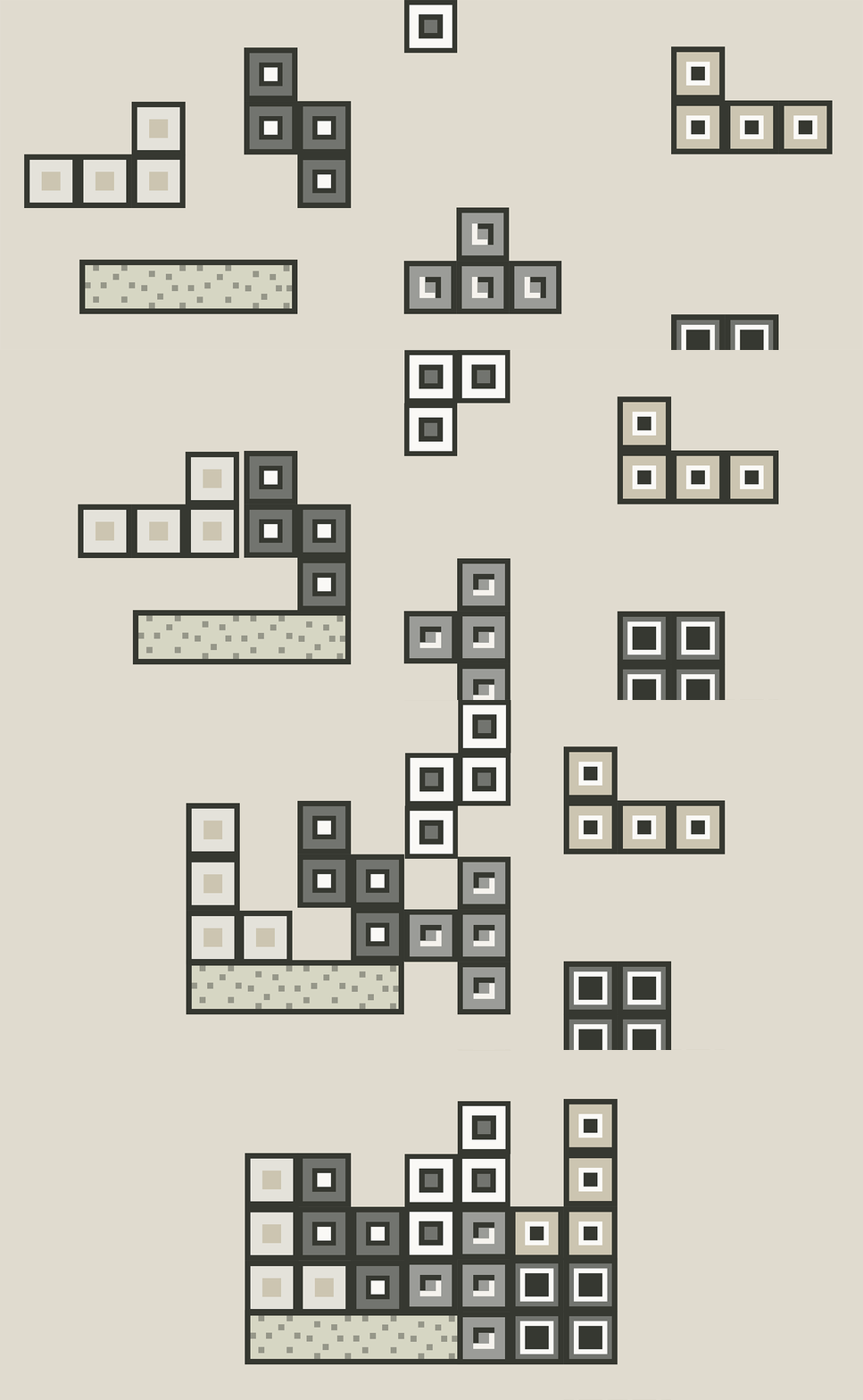
Tetris shapes that can be applied to functions in space planning.
Know the Shapes You’re Working With
In Tetris, you don’t win by forcing every piece into the same role. You succeed by understanding what each shape does well and placing it accordingly.
In space planning, the “pieces” are functions:
Bathing
Cooking
Storage
Sleeping
Gathering
Circulation
Problems arise when these functions are not clearly defined. A room that tries to serve too many purposes often ends up serving none of them particularly well. To illustrate how function translates into small space planning, we’ll use the Steep Hill Heirloom Sleeping Cabin as a case study.
In the Heirloom Sleeping Cabin the functional demand is narrow. It is designed primarily for guest use. That clarity allows certain shapes to be smaller and others to disappear entirely. Storage can be modest. Kitchen facilities can be minimal. Living space can be larger and more flexible rather than fixed.
Defining the use of spaces early helps to clarify the functionality needed, making it easier to fit them all into a small footprint.
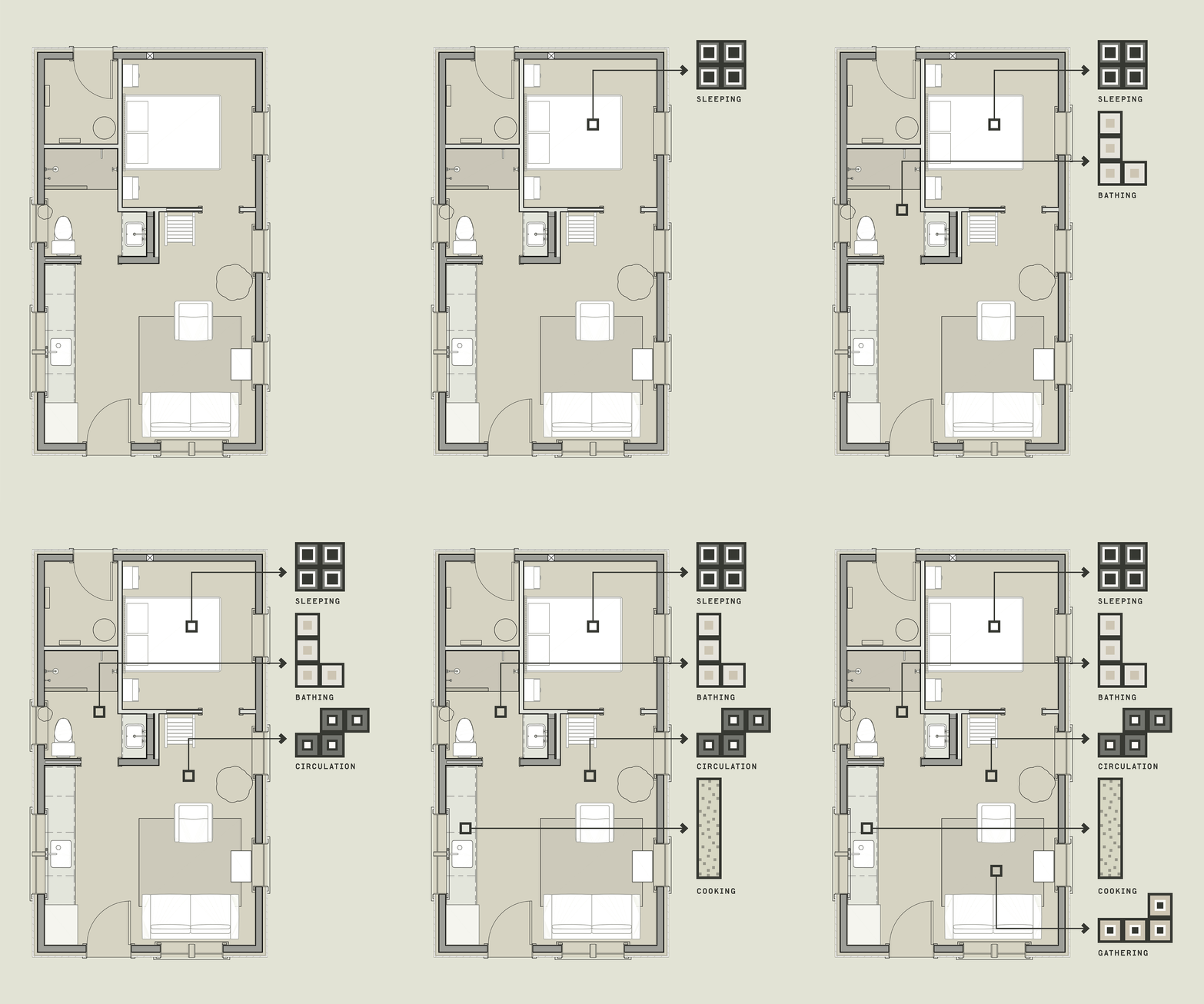
The Steep Hill Heirloom Sleeping Cabin Floor Plan and the Tetris shapes that help us define space functions.
To continue reading we invite you to join The Studio.
Use STUDIO10 for 10% Off
Need help with a special build HERE in Muskoka?
Reach out to Ruhl Builds, our full-service design and engineering firm, to tell us about your project.