
FROM BASIC TO HEIRLOOM - THE COST OF BUILDING A BETTER SMALL HOME
Small footprint houses are something we are increasingly asked about. These buildings can add space, introduce a rental revenue stream, or serve as a primary residence. There is a lot to consider with respect to small footprint houses but in this article, we are going to focus on the most common question we get about these projects, “What does it cost to build one?”.
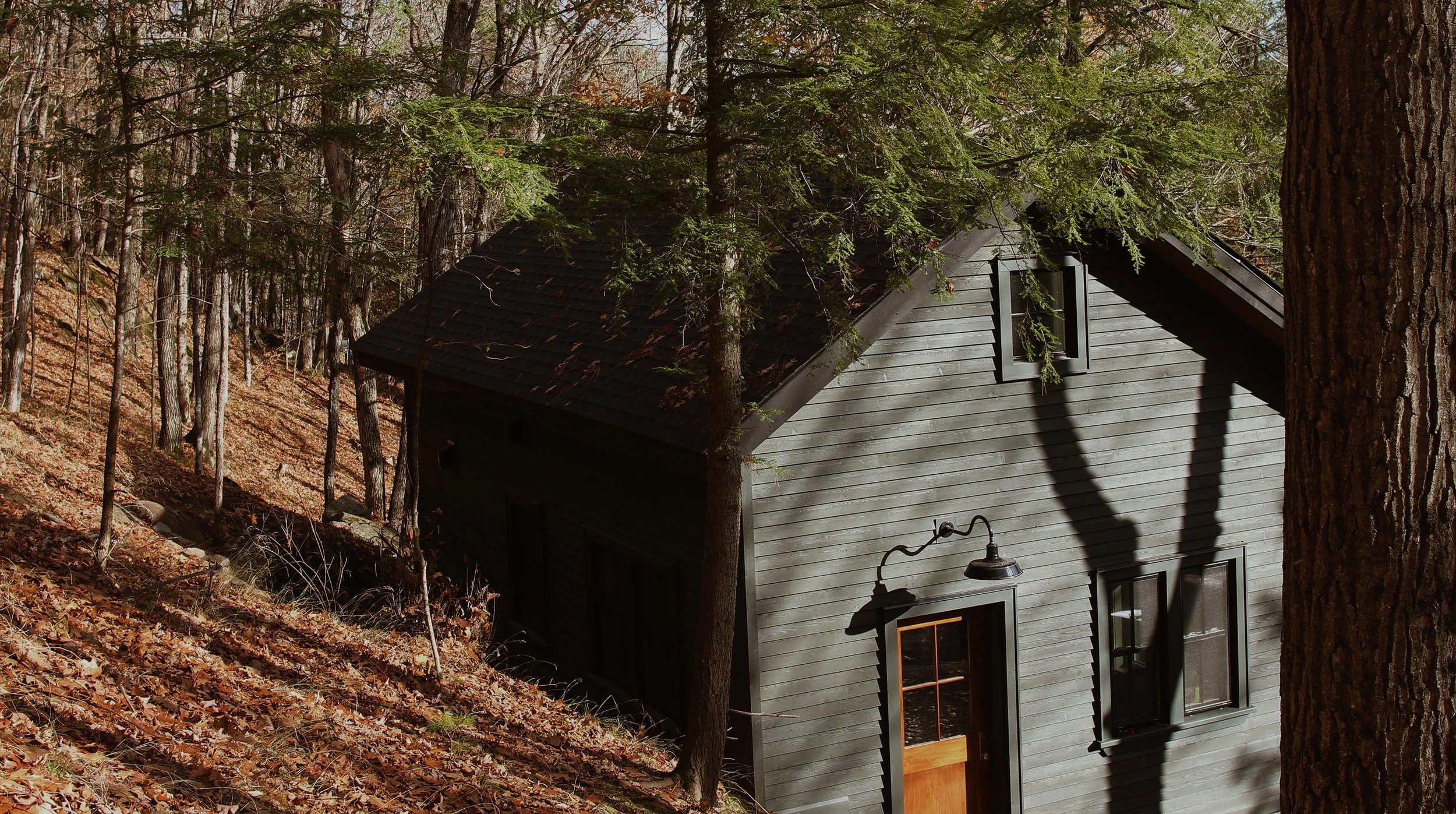
The Steep Hill Heirloom Cabin nestled in a wooded landscape.
Our definition of a “small footprint home” is based on achieving sufficient space to allow for the use of full scale room dimensions, standard furnishings, appliances and fixtures.
What DO We Mean by a Small Footprint House?
For the purposes of this discussion, we are referring to permanent, year-round dwellings with full, independent utilities which occupy a land area that is a fraction of what would be occupied by a conventional house.
Our definition of a “small footprint home” is based on achieving sufficient space to allow for the use of full scale room dimensions, standard furnishings, appliances and fixtures. When the building footprint is less than about 300 sq. ft., this becomes increasingly difficult to accommodate without meaningful compromise. Above a footprint area of 450 sq. ft., the planning and cost dynamics begin to resemble those of a conventional house.
Footprint is effectively the same as foundation area. The reason this matters is that as the foundation area increases, the total cost of construction increases substantially. So the goal is to manage footprint size but this doesn’t exclude the inclusion of loft spaces or second stories which generally offer exceptional cost performance and increased living space.
In cold climates like ours, permanent year-round use also requires frost-protected foundations and carefully designed building envelopes. This has important cost implications and establishes a relatively high baseline level of construction.
Basically, for the purpose of this discussion, we talking about 4 season dwellings that have a footprint area between 300 and 450 square feet.
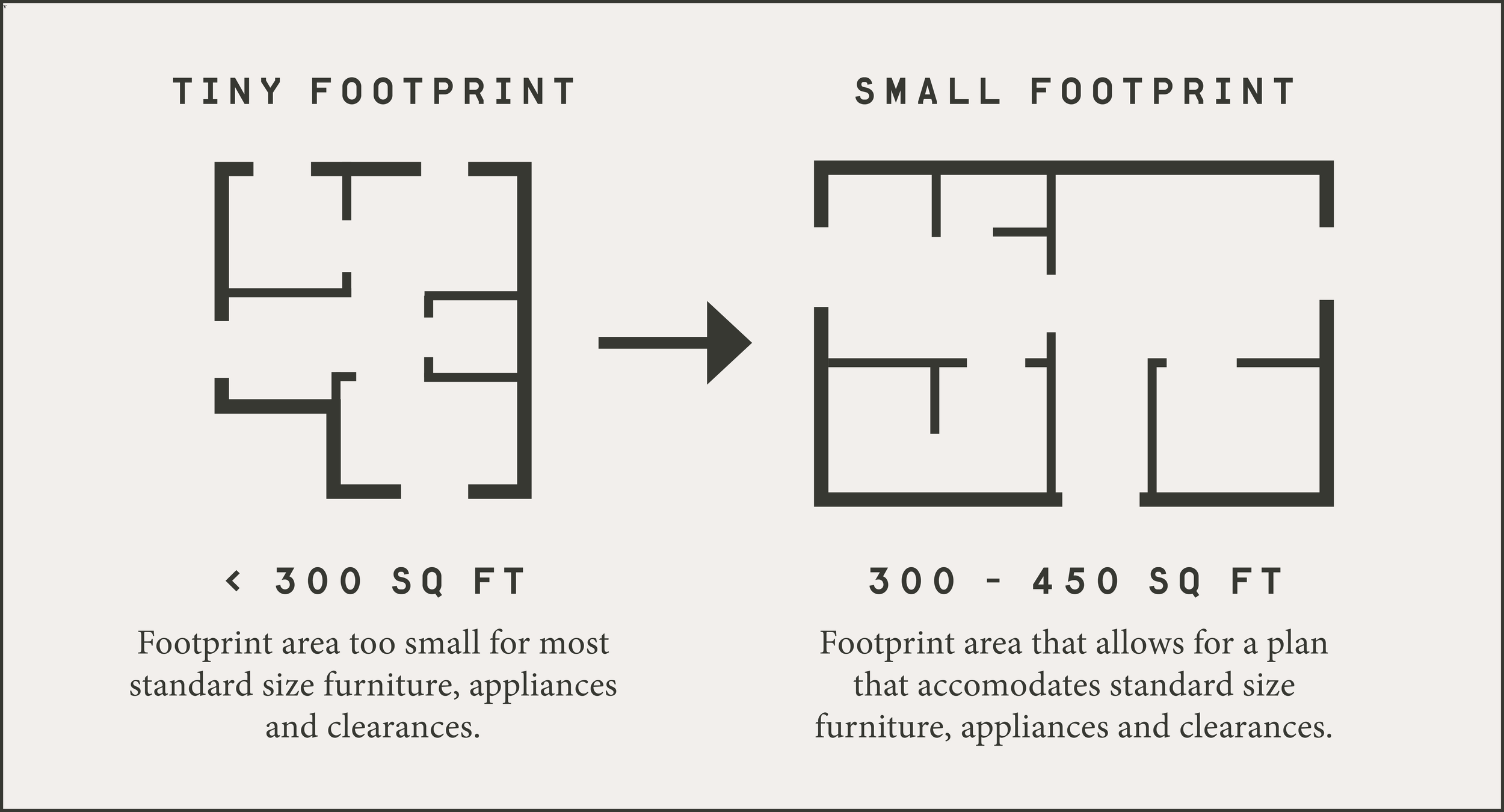
Graphical comparison between a tiny home and small home footprint.
The design brief for this project was simple but demanding:
Design and build a small footprint house capable of lasting 100 years without requiring major renovation or architectural revision.
Case Study: The Heirloom Sleeping Cabin
To illustrate how costs behave in a small footprint building, we use the Heirloom Sleeping Cabin as a reference project. While it was designed primarily as a sleeping cabin for guests or short-term rental use, the building is fully provisioned for year-round, full-time occupancy.
The design brief for this project was simple but demanding:
Design and build a small footprint house capable of lasting 100 years without requiring major renovation or architectural revision.
At first glance, a century-long lifespan without fundamental renovation may seem ambitious. Yet many heritage buildings in our area, including our own cottage, have done exactly that. These were not necessarily exceptional buildings when they were first constructed, but they were designed with enduring proportions and built with quality, natural materials. They are common, familiar, and they stand as living proof that longevity is achievable. We call these Heirloom Quality buildings.
Designing an heirloom quality building requires prioritizing durability, comfort, and architectural integrity. It represents a deliberate departure from contemporary building practices that tend to prioritize minimizing upfront cost. We refer to this approach as Heirloom Design.
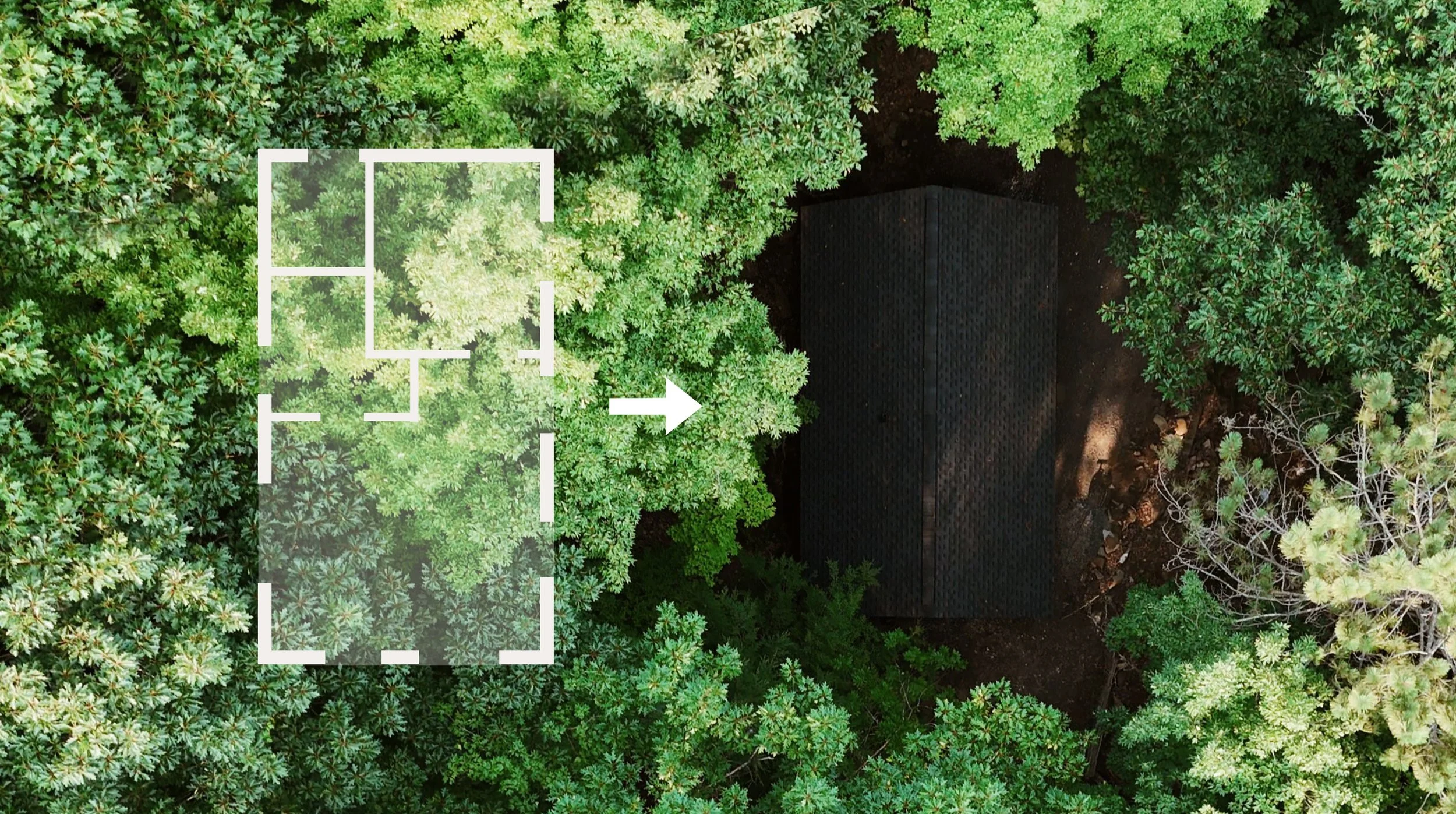
Bird’s eye view of the Steep Hill Cabin and a graphic of the floor plan.
To continue reading this article we invite you to join The Studio.
Use STUDIO10 for 10% Off
moRE ON SMALL HOME LIVING:
Need help with a special build HERE in Muskoka?
Reach out to Ruhl Builds, our full-service design and engineering firm, to tell us about your project.