
20 DESIGN DETAILS THAT MAKE A SMALL HOME FEEL SPACIOUS
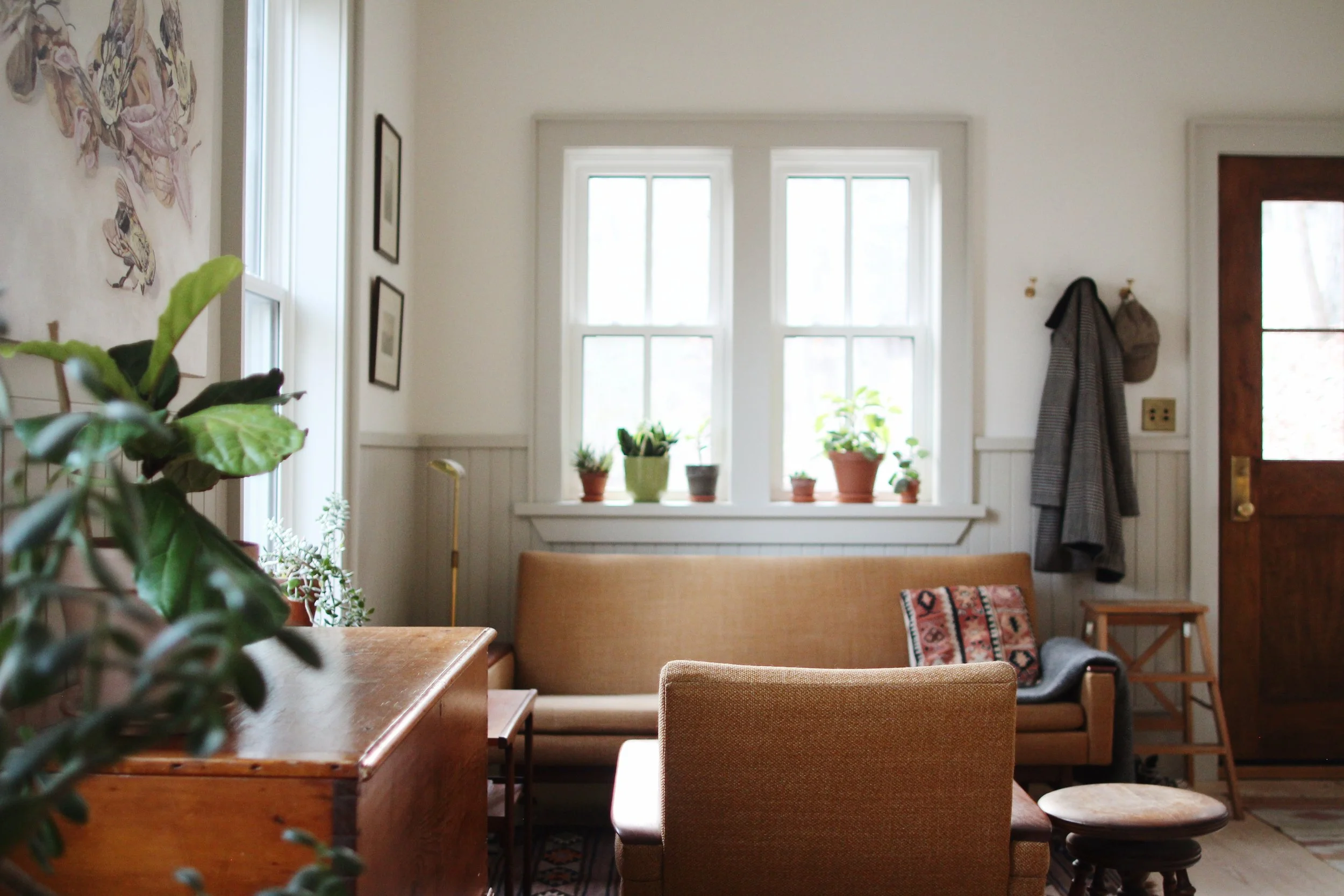
Steep Hill Heirloom Sleeping Cabin: The living room area is comprised of a vintage R. Huber couch and chair set, brass floor lamp, vintage kilim textiles, a vintage pine trunk, custom window trim and wainscoting with lots of plants along the window sills. Coat hooks and a step ladder sit to the left of the stained pine front door with unlacquered brass hardware.
Designing a small home that feels spacious is less about increasing square footage and more about resolving a series of foundational decisions with care. In a compact plan, proportion, volume, daylight, and circulation all carry more weight, and minor adjustments can meaningfully affect how the space is experienced.
Many of the details that contribute to a sense of openness are architectural in nature and are best addressed early in the planning process. Ceiling heights, window and door proportions, and circulation layouts are difficult to revise once construction is underway, and they establish the spatial limits of the building. Interior design decisions made later, including finishes, lighting, and furnishings, can reinforce these choices, but they cannot compensate for them.
When a small home is resolved carefully at this foundational level, it will feel calm, balanced, and comfortable to inhabit. That sense of spatial clarity is closely tied to heirloom longevity. Spaces that are proportioned well and easy to live in age more gracefully and remain desirable long after trends shift.
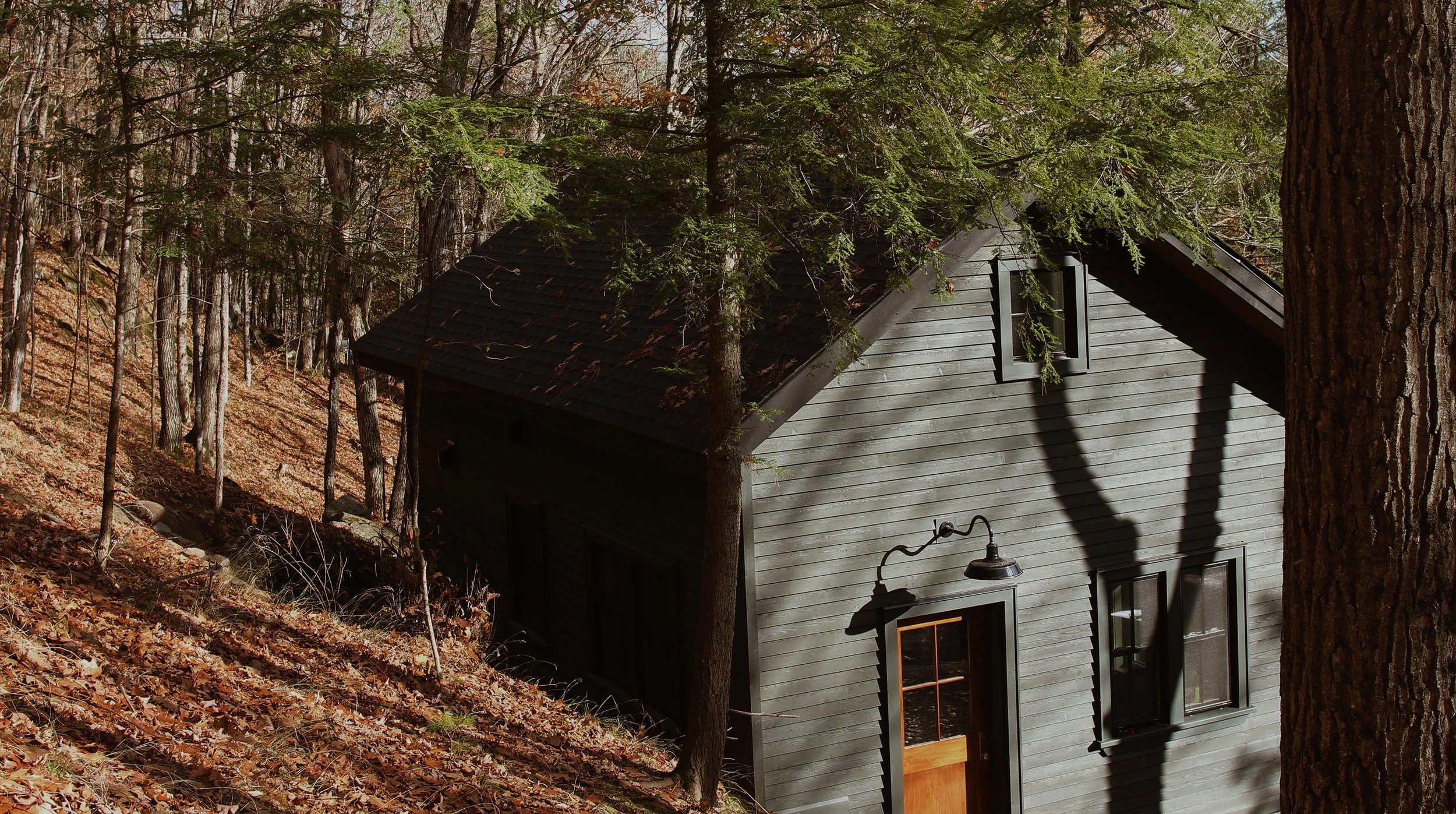
The design details that follow outline how these foundational decisions were applied in the Steep Hill Heirloom Sleeping Cabin.
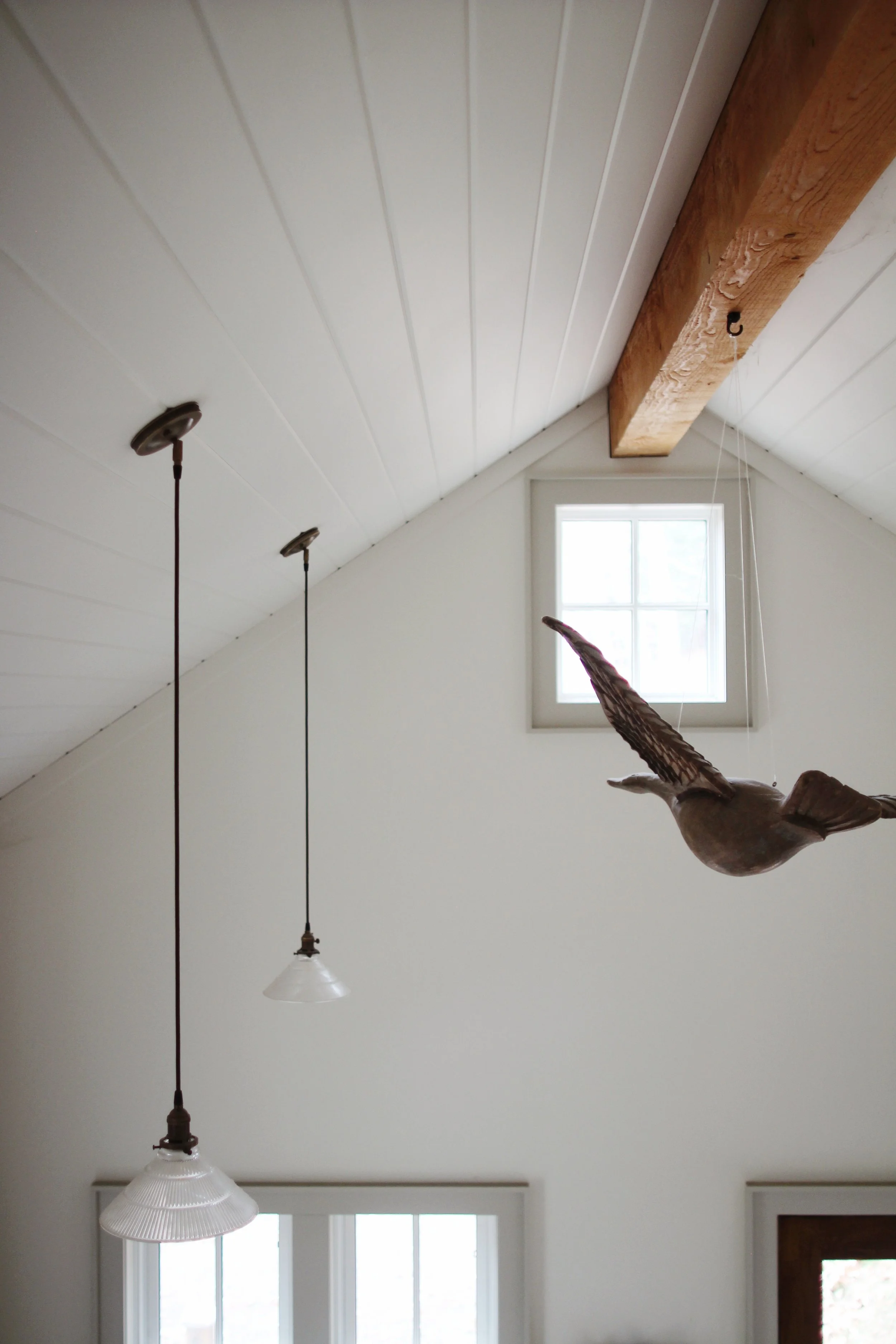
Steep Hill Heirloom Sleeping Cabin: A view of the vaulted ceiling from the loft space shows the rough sawn fir ridge beam, tongue and groove ceiling cladding, hanging goose sculpture and two of four fluted glass pendants that drop from midway down the roof pitch. A window positioned high into the gable brings in afternoon light.
1. Vaulted Ceiling in Common Space
A vaulted ceiling in the primary living area concentrates volume where it has the greatest impact. This helps balance a compact footprint and allows secondary spaces such as bedrooms and bathrooms to remain efficient and contained, while the space that is occupied most feels generous.
In the Steep Hill Heirloom Sleeping Cabin:
The entry, living area, kitchenette, and primary circulation all fall within the vaulted ceiling zone. This decision dramatically changes the experience of the cabin, creating a sense of openness typically associated with a much larger home.
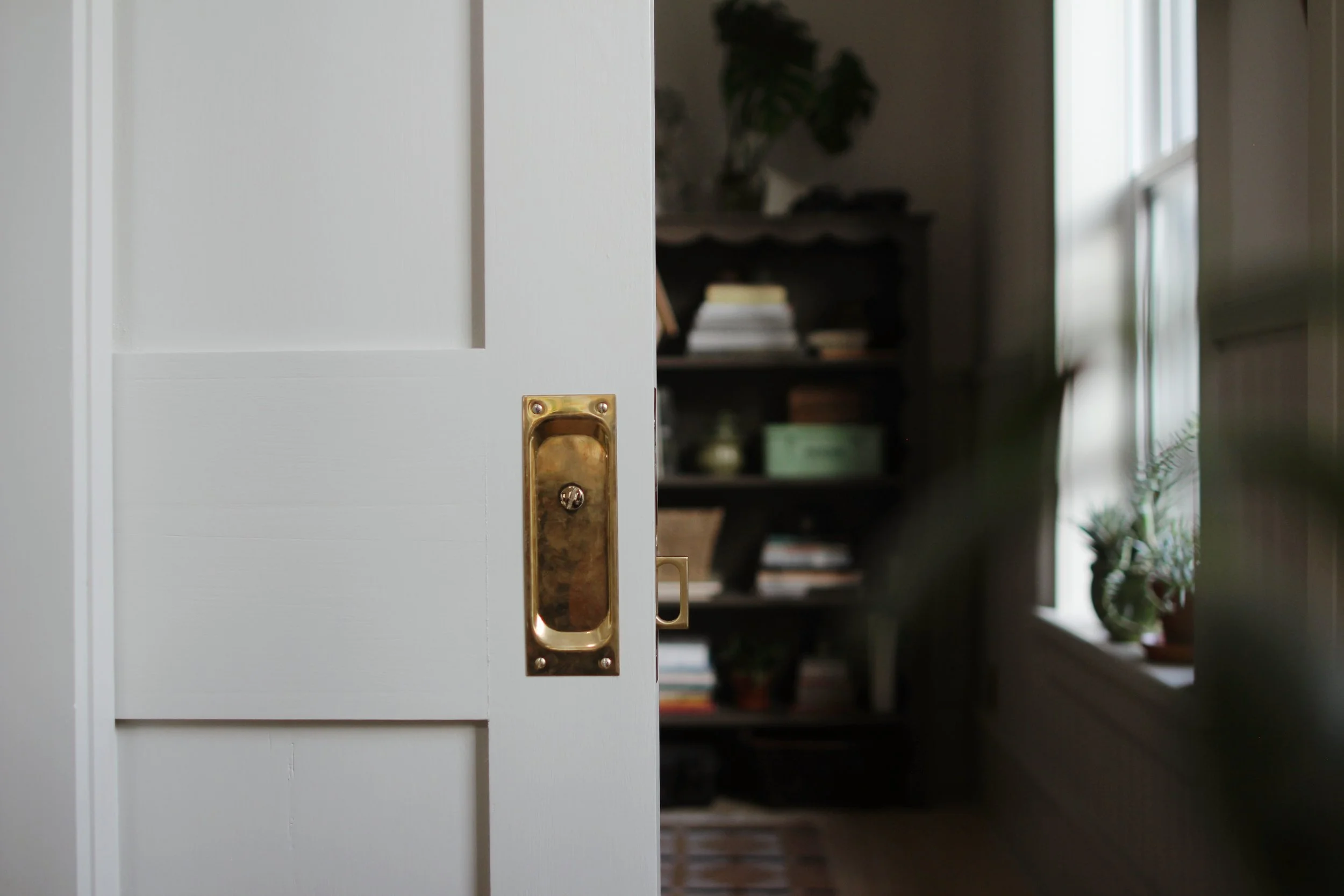
Steep Hill Heirloom Sleeping Cabin: A pocket door to the main floor bedroom/office sits partially open showing the unlacquered brass hardware.
2. Pocket Doors
Pocket doors eliminate swing clearance, freeing up usable wall and floor space. When left open, they allow rooms to borrow visual space from one another, reinforcing openness and flexibility.
In the Steep Hill Heirloom Sleeping Cabin:
Both the main-floor bedroom and bathroom use pocket doors to preserve usable footprint in each room and maintain a more open plan overall. They also support light flow and visual connection through the cabin. Quality hardware and solid wood door panels were important factors to make this door type perform well and feel substantial.
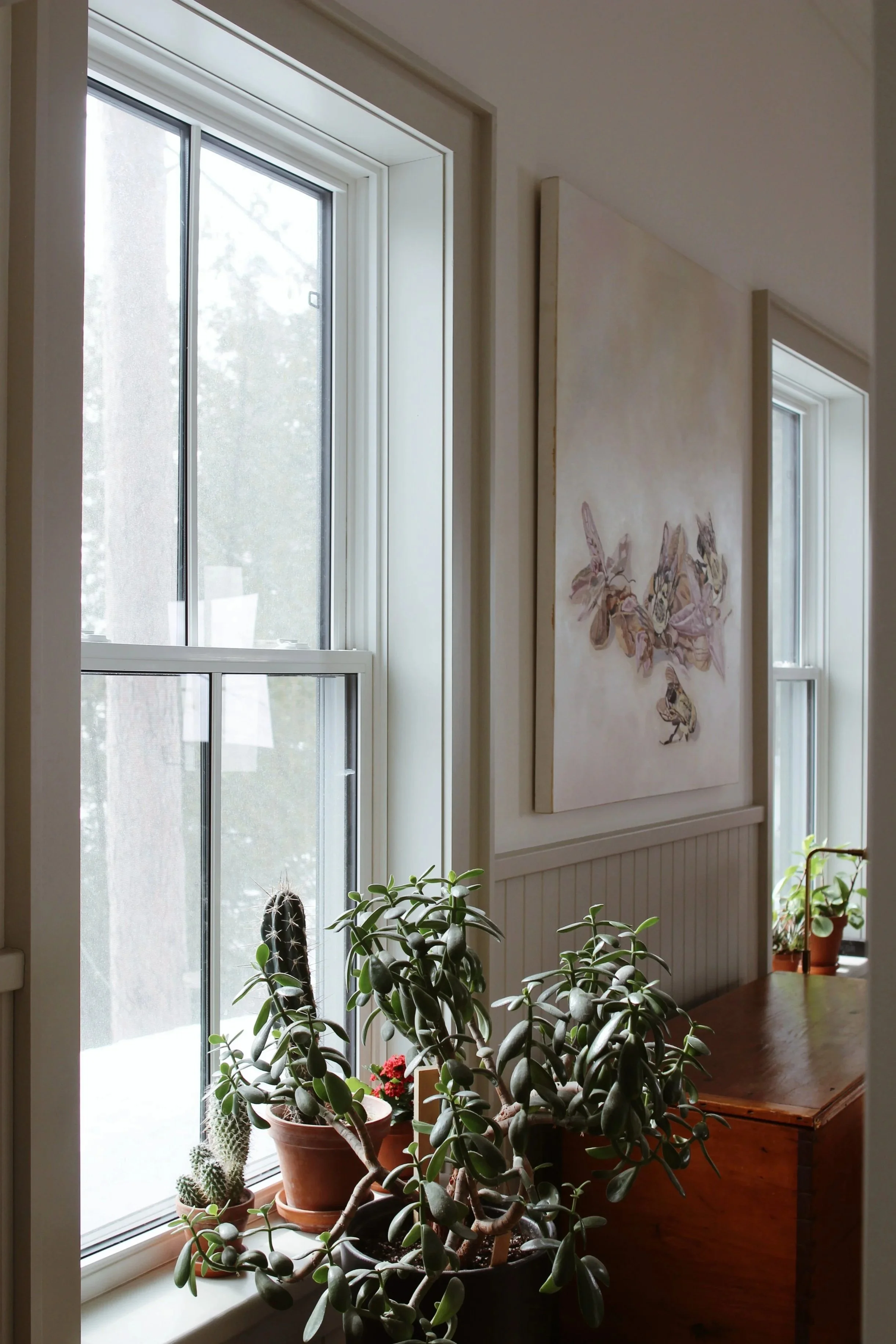
Steep Hill Heirloom Sleeping Cabin: Two of three tall windows on the southern exterior wall of the cabin let in lots of natural light, which is great for the plants that sit atop the deep sills.
3. Tall Windows
Windows that extend higher on the wall draw the eye upward and emphasize vertical proportion. They also improve access to daylight deeper into the plan, making small rooms feel brighter and more expansive.
In the Steep Hill Heirloom Sleeping Cabin:
Along the south-facing exterior wall, three large windows measuring 36 × 72 inches were scheduled to bring in natural light, frame views to the surrounding landscape, and reinforce the height of the vaulted space.
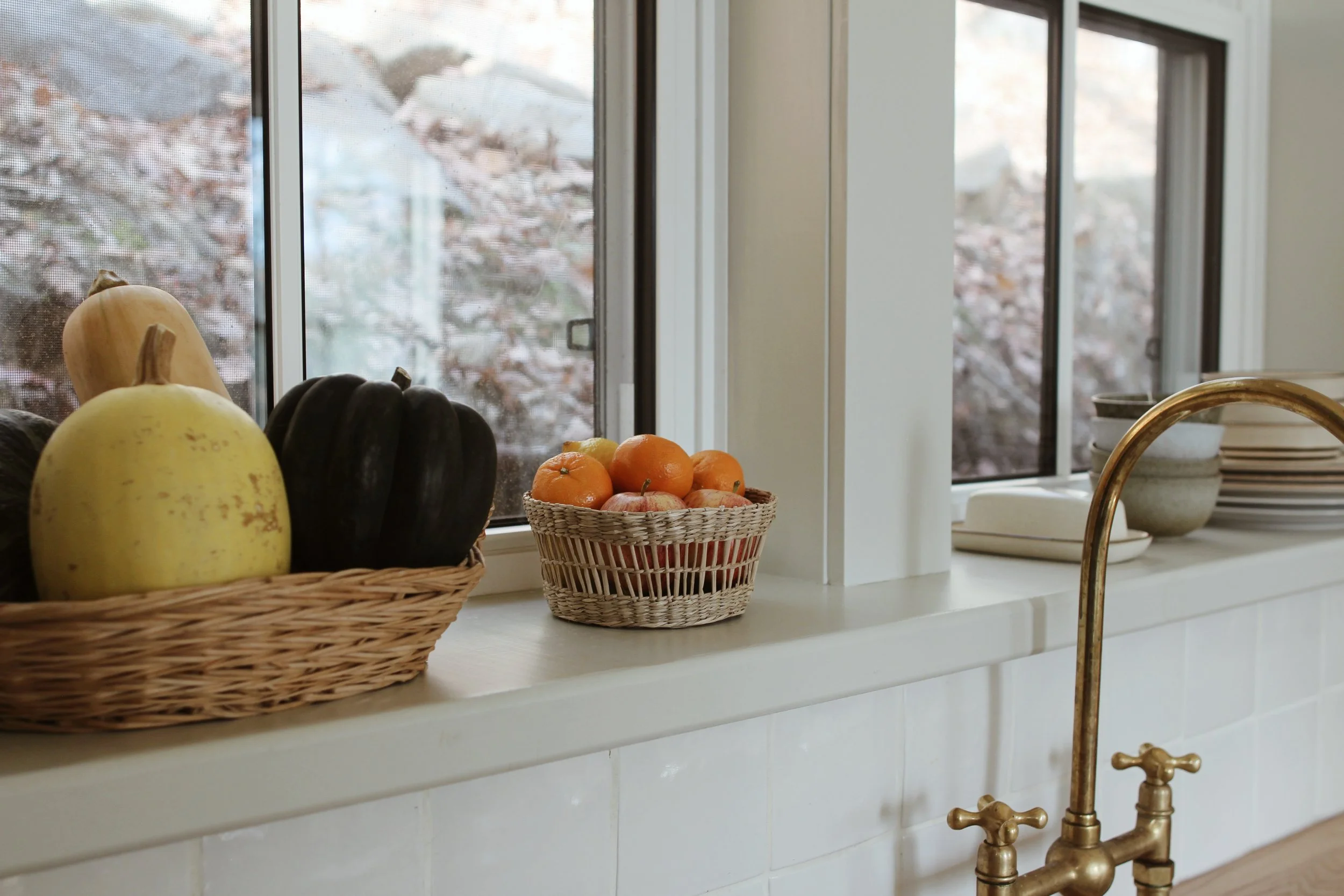
Steep Hill Heirloom Sleeping Cabin: The 11 in deep windowsill behind the kitchenette counter and bridge faucet offers additional storage space for fruit, vegetables and dinnerware.
4. Deep Windowsills
Deep sills give windows visual weight and make wall thickness legible. They add perceived depth to the building envelope and can double as display or practical ledge space.
In the Steep Hill Heirloom Sleeping Cabin:
Windowsills range from 7¼ to 11 inches deep, providing ample space for plants along the south and west-facing walls. Along the north wall, the deeper sill is used as additional kitchenette storage.
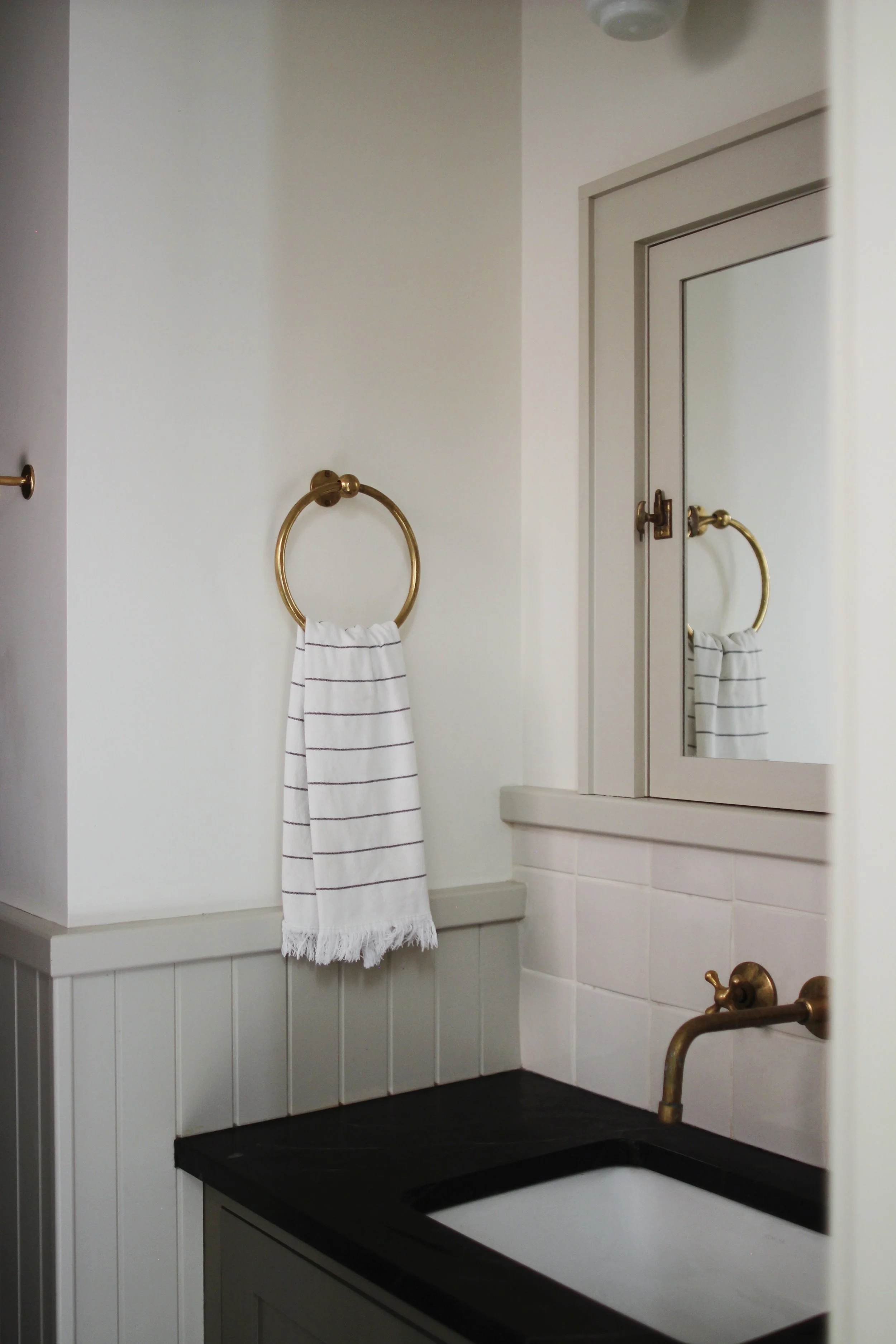
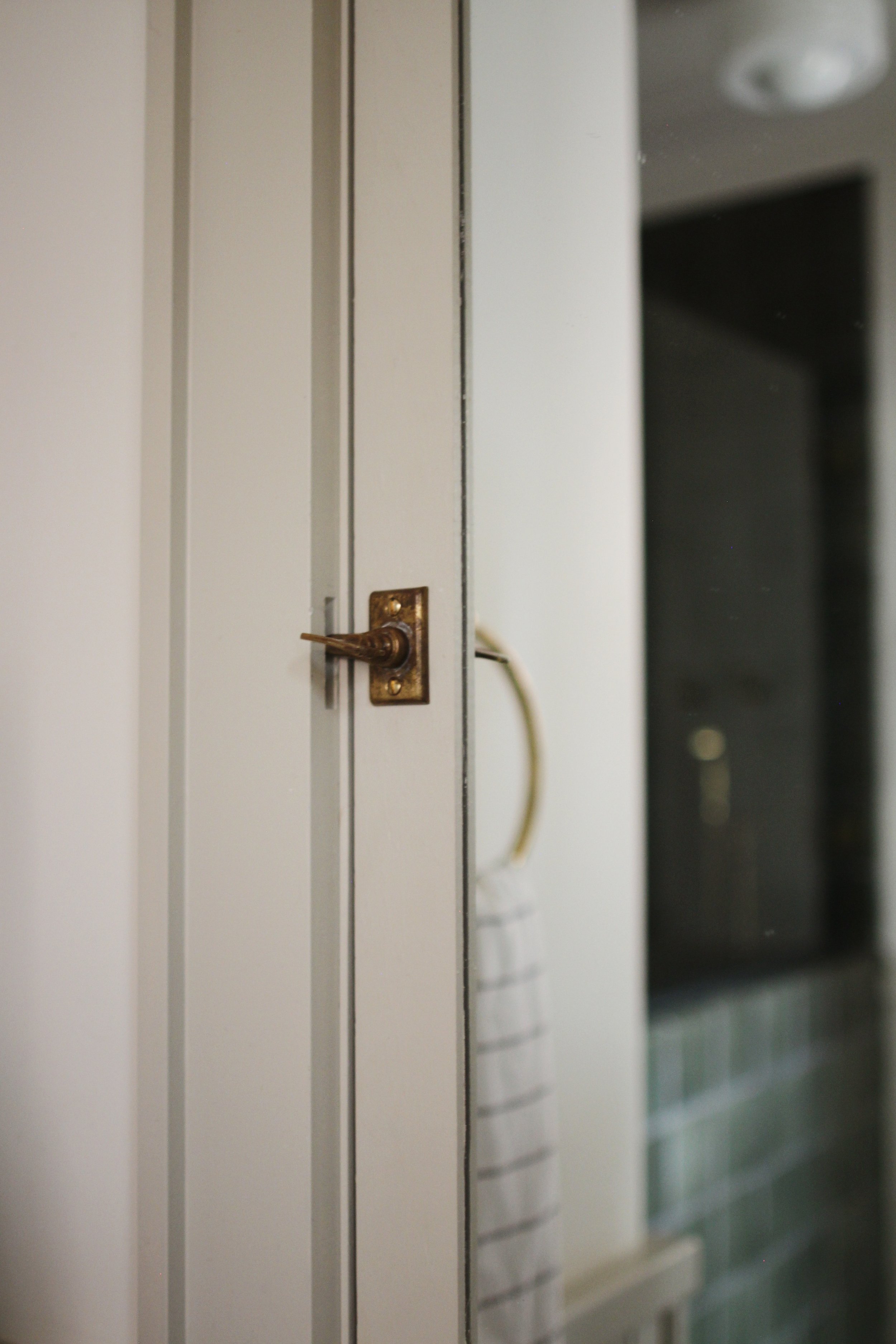
Steep Hill Heirloom Sleeping Cabin: Left image shows a wider view of the cabin bathroom and how the recessed medicine cabinet sits above a tiled backsplash above the soapstone vanity counter. Right image shows the vintage medicine cabinet latch and the trim in more detail.
5. Recessed Cabinetry
Recessing storage into wall cavities reduces visual and physical protrusions. This keeps circulation paths clear and helps rooms feel calmer and more ordered. It needs to be decided before framing so the cavity can be coordinated with structure and services.
In the Steep Hill Heirloom Sleeping Cabin:
The bathroom medicine cabinet is recessed to provide storage for daily essentials behind the mirror while keeping the vanity counter free of clutter. This preserves space for towels, cleaning supplies, and bathroom essentials in the cabinet under the vanity.
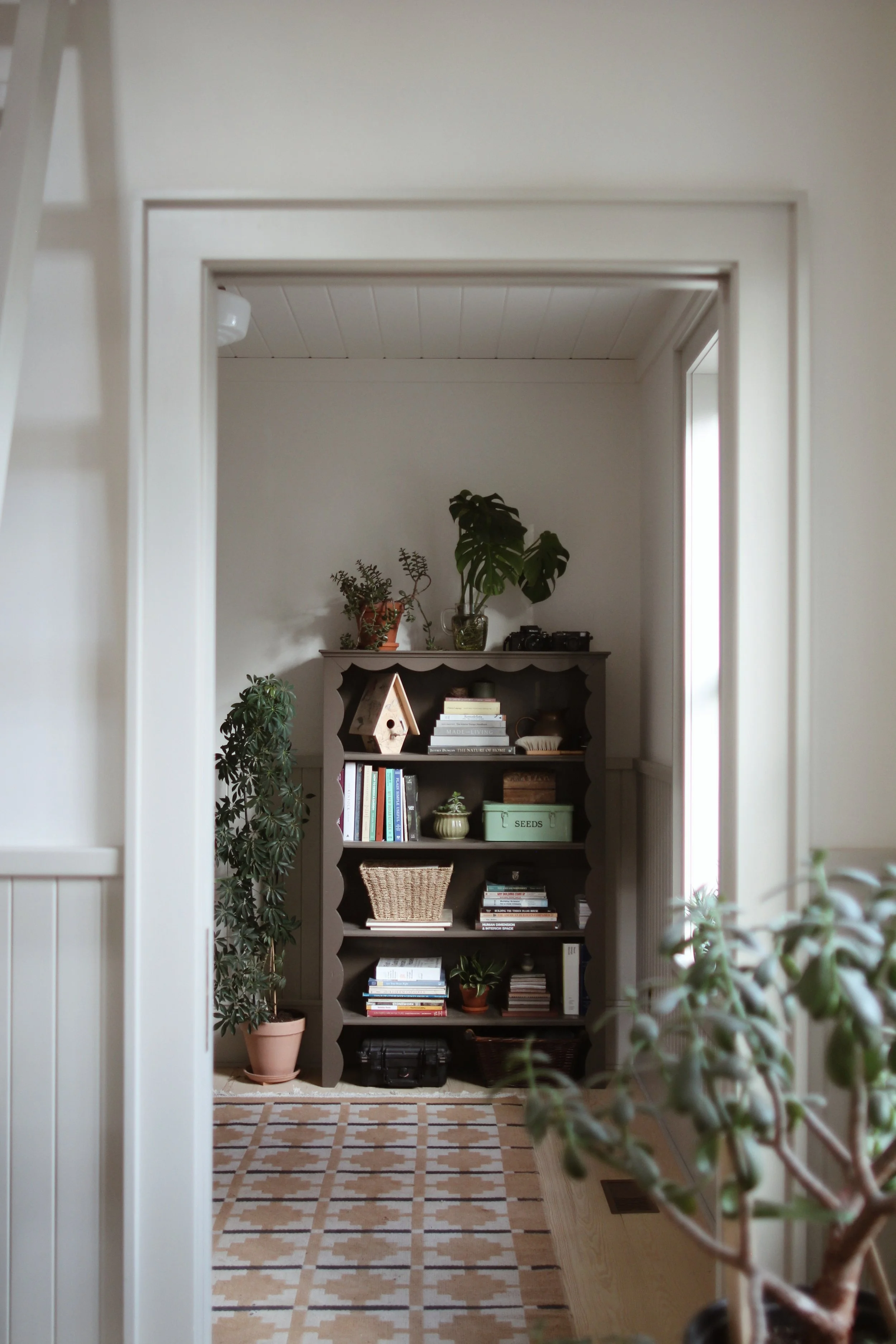
Steep Hill Heirloom Sleeping Cabin: View through an open doorway into the main floor bedroom/office showing an eclectically styled bookshelf with a monstera cutting reaching to the tongue and groove clad ceiling above, which has a height of 9 feet.
6. Nine-Foot Ceilings
Modestly increased ceiling height improves room proportions massively. The additional vertical space supports taller windows, doors, and cabinetry, all of which contribute to a more generous feel within the home.
In the Steep Hill Heirloom Sleeping Cabin:
Nine-foot ceilings in the main-floor bedroom and bathroom make these compact rooms feel more open and allow for taller windows. This was a trade-off with loft height, but it prioritized daily-use rooms where that added volume is felt most.
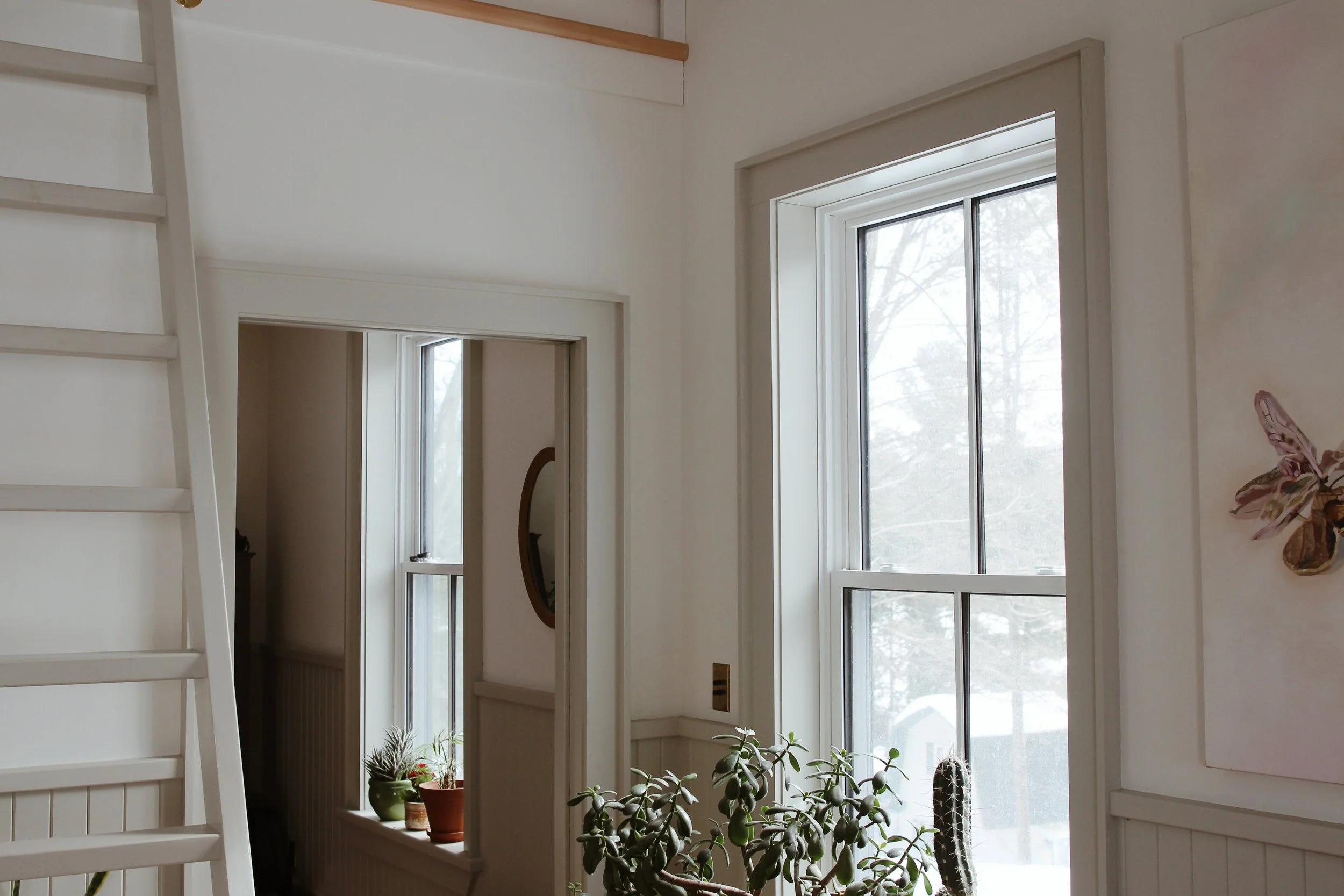
Steep Hill Heirloom Sleeping Cabin: The 84” door opening to the main floor bedroom/office.
7. Tall Door Openings
Standard door openings are typically 80 inches. Slightly taller door openings, even if only a few inches, reinforce vertical proportion and reduce the compressed feeling common in small homes. Aligning door heights across the plan also strengthens rhythm and order.
In the Steep Hill Heirloom Sleeping Cabin:
Door openings were scheduled at 84 inches to better align with the nine-foot ceilings and tall windows. Because the pocket doors are typically left open, the larger openings also improve sightlines into adjacent rooms.
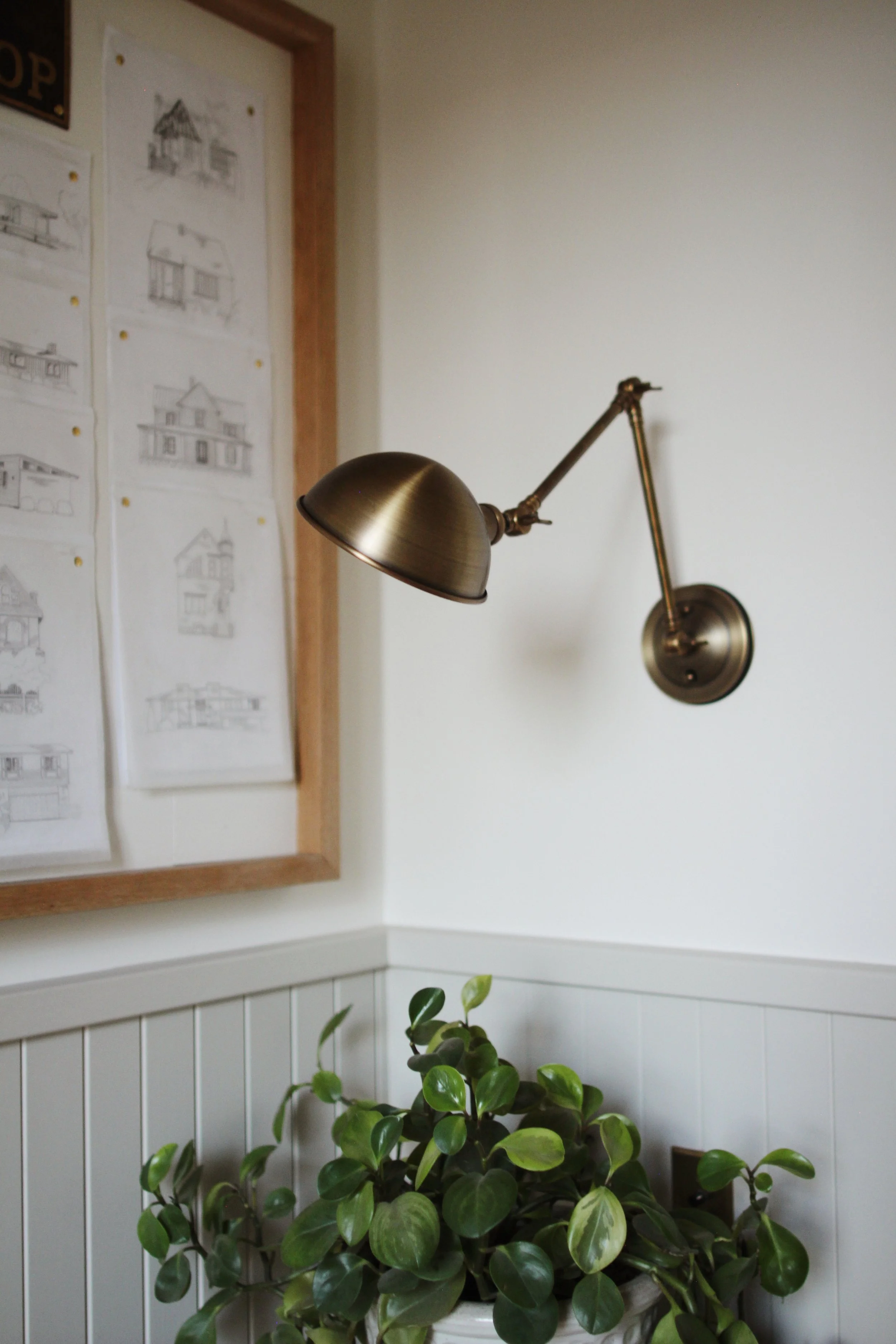
Steep Hill Heirloom Sleeping Cabin: Corner of the main floor bedroom currently serving as an office featuring am adjustable arm wall sconce above wainscoting. Below the sconce a lush rubber plant sits on a small side table. On the wall to the left, a cork board is pinned with architectural drawings.
8. Wall Sconces
Wall-mounted lighting frees up surface area on bedside tables and keeps plug space available for charging devices. This reduces clutter and allows bedside furniture to be scaled appropriately for smaller bedrooms. This is an important decorative element to assign during the electrical planning phase.
In the Steep Hill Heirloom Sleeping Cabin:
Wall sconces were installed in both the main-floor bedroom and the loft to provide task lighting without consuming floor or tabletop space. While the main-floor bedroom is currently used as an office, the sconces still work well as adjustable lighting at each workstation.
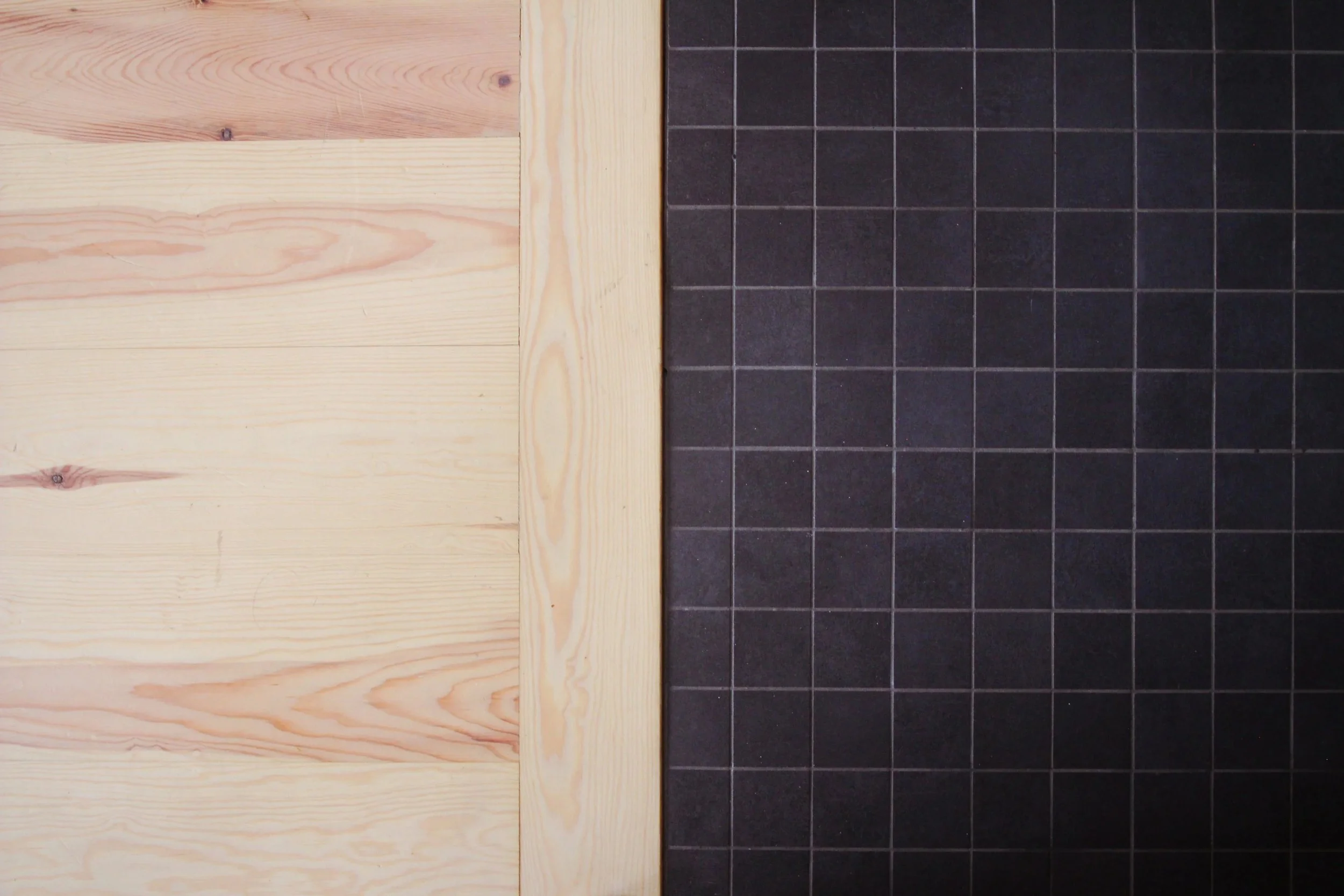
Steep Hill Heirloom Sleeping Cabin: Flush transition between clear grade solid pine flooring and 2×2 porcelain tile in a slate gray.
9. Flush Transitions Between Spaces
Keeping floor levels and thresholds flush avoids visual interruption and reduces the feeling of separate, chopped-up rooms. Continuous planes help a small home read as a single connected interior.
In the Steep Hill Heirloom Sleeping Cabin:
When the pine floor transitions to tile at the bathroom, a flush transition was treated as a priority. Carrying consistent tile through the bathroom and into the shower further supports the sense of continuous floor area.
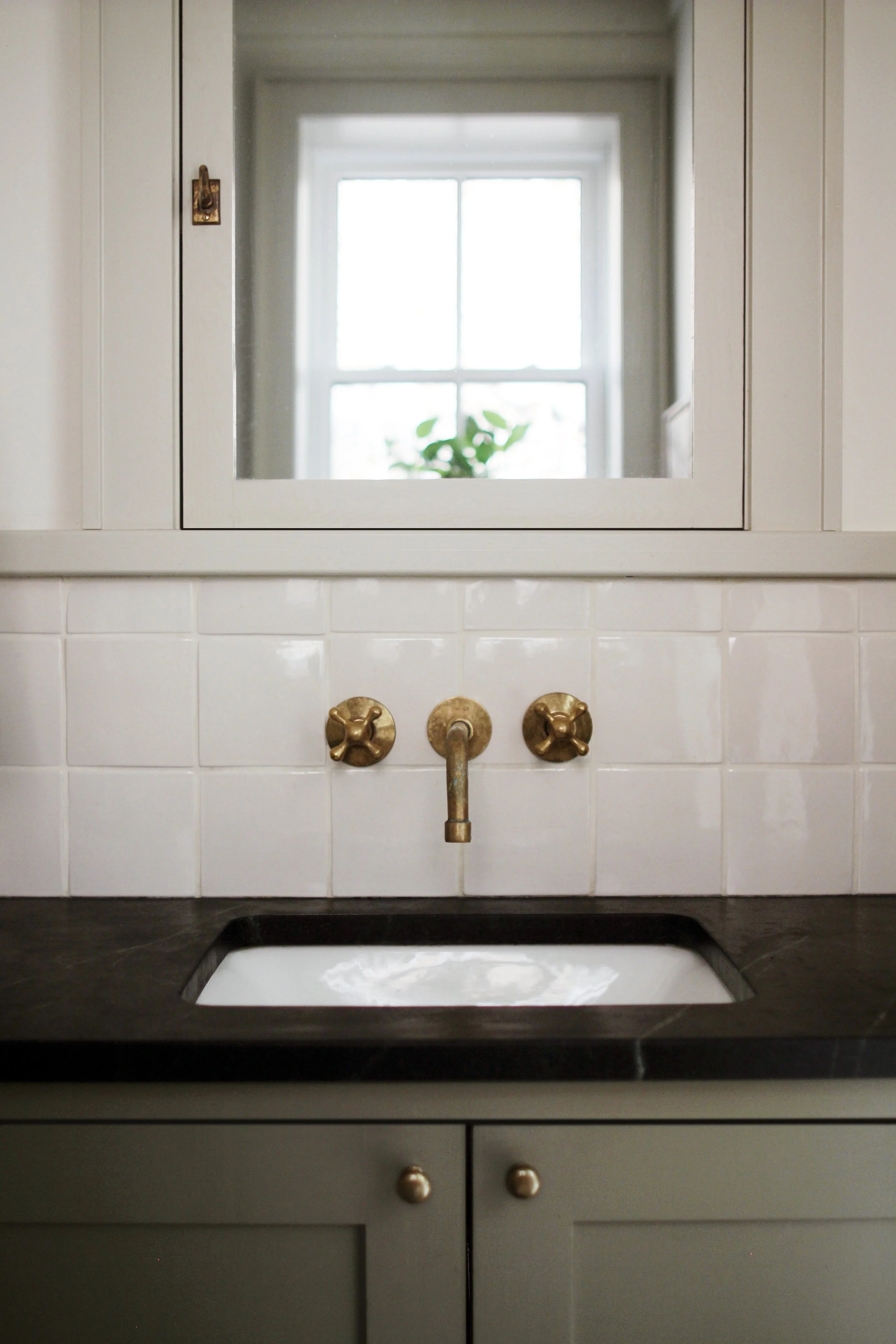
Steep Hill Heirloom Sleeping Cabin: Bathroom vanity details featuring the recessed medicine cabinet, neutral trim, 5×5 tile backsplash, soapstone countertop, unlacquered brass wall-mounted plumbing fixtures and cabinet hardware. Shaker cabinets are painted a muted mossy green.
10. Fewer, Better Materials
A restrained material palette reduces visual complexity and strengthens architectural clarity. Repeating high-quality materials across spaces makes a small home feel intentional and cohesive.
In the Steep Hill Heirloom Sleeping Cabin:
Hand-glazed 5 × 5 tile appears in both the kitchenette and bathroom, a single Shaker cabinet profile is carried throughout, and unlacquered brass is used consistently on hardware and plumbing fixtures. Solid pine flooring runs continuously, and all ceilings are clad with the same tongue-and-groove paneling. This repetition gives the interior order and a distinct feeling of quality.
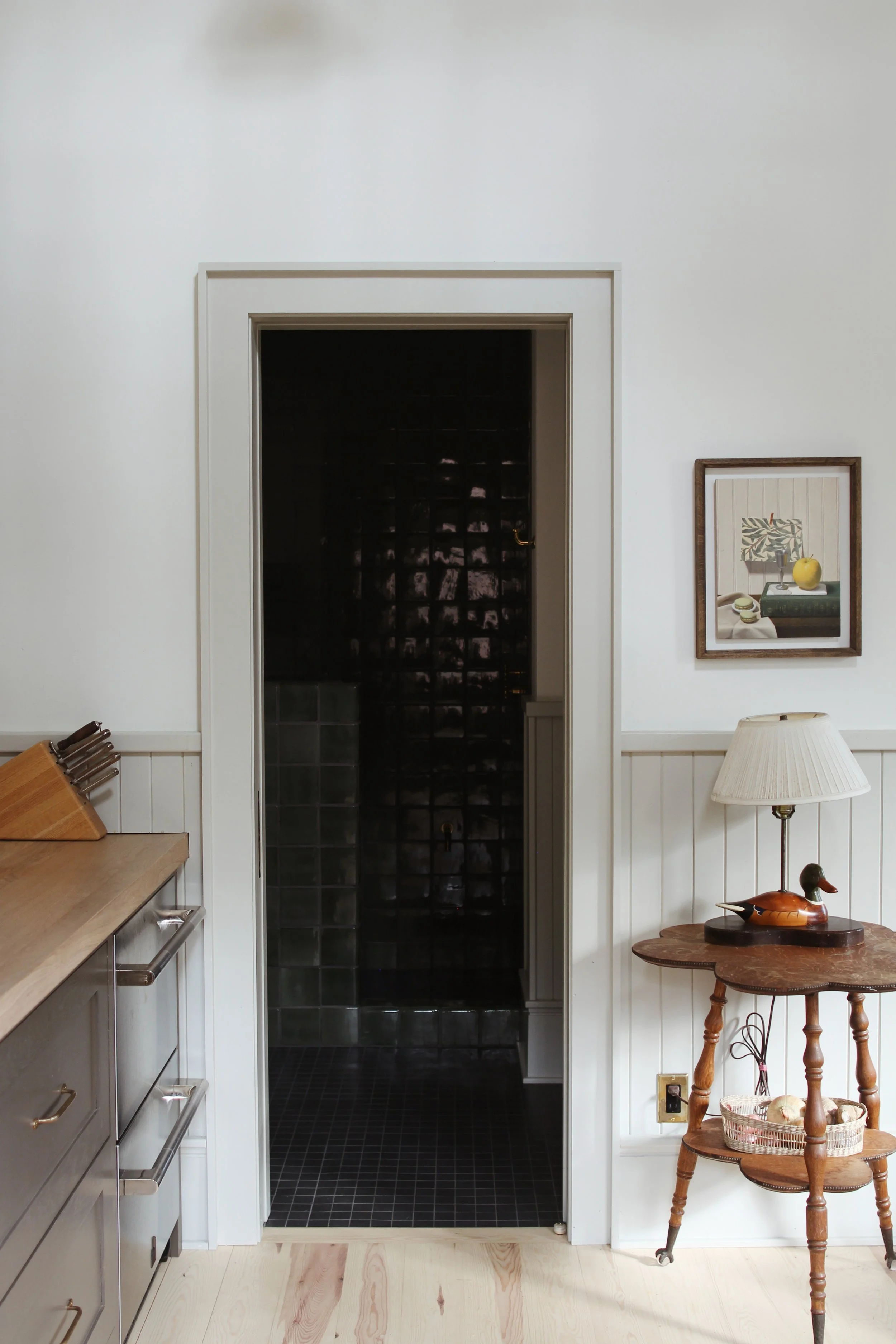
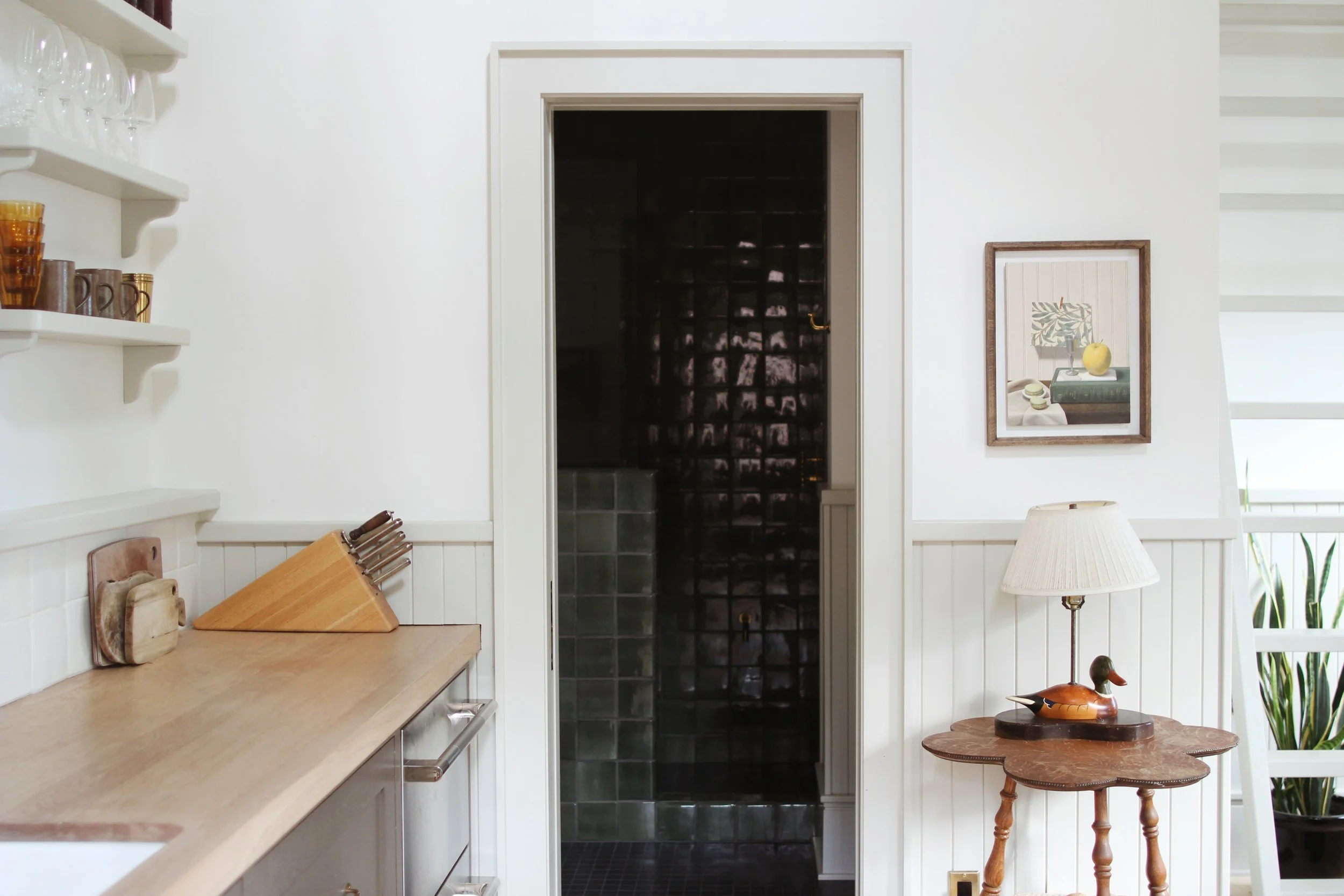
Steep Hill Heirloom Sleeping Cabin: A sight line from the entryway, past the kitchenette, into the bathroom through an open pocket door shows the glossy shower tile reflecting light and small format floor tile. The doorway features carefully crafted trim with wainscoting on either side. To the left and under counter drawer fridge and to the right, a vintage clover leaf side table sits below an oil painting, hosting a vintage mallard lamp and basket of root vegetables.
11. Simple Glossy Tile
Glossy tile reflects light and adds subtle depth, particularly in bathrooms and kitchens. Simple tile formats such as square or subway allow colour and texture to stand out without overwhelming a compact space with a busy pattern or decorative distraction.
In the Steep Hill Heirloom Sleeping Cabin:
A 5 × 5 hand glazed, cypress green tile was used in the shower, which is visible when the door is open. The same 5 × 5 glazed tile in a linen white was then used as the backsplash at the vanity and kitchenette. The glazed finish adds lightness and a hint of shine, while the simple grid layout provides texture without visual clutter.
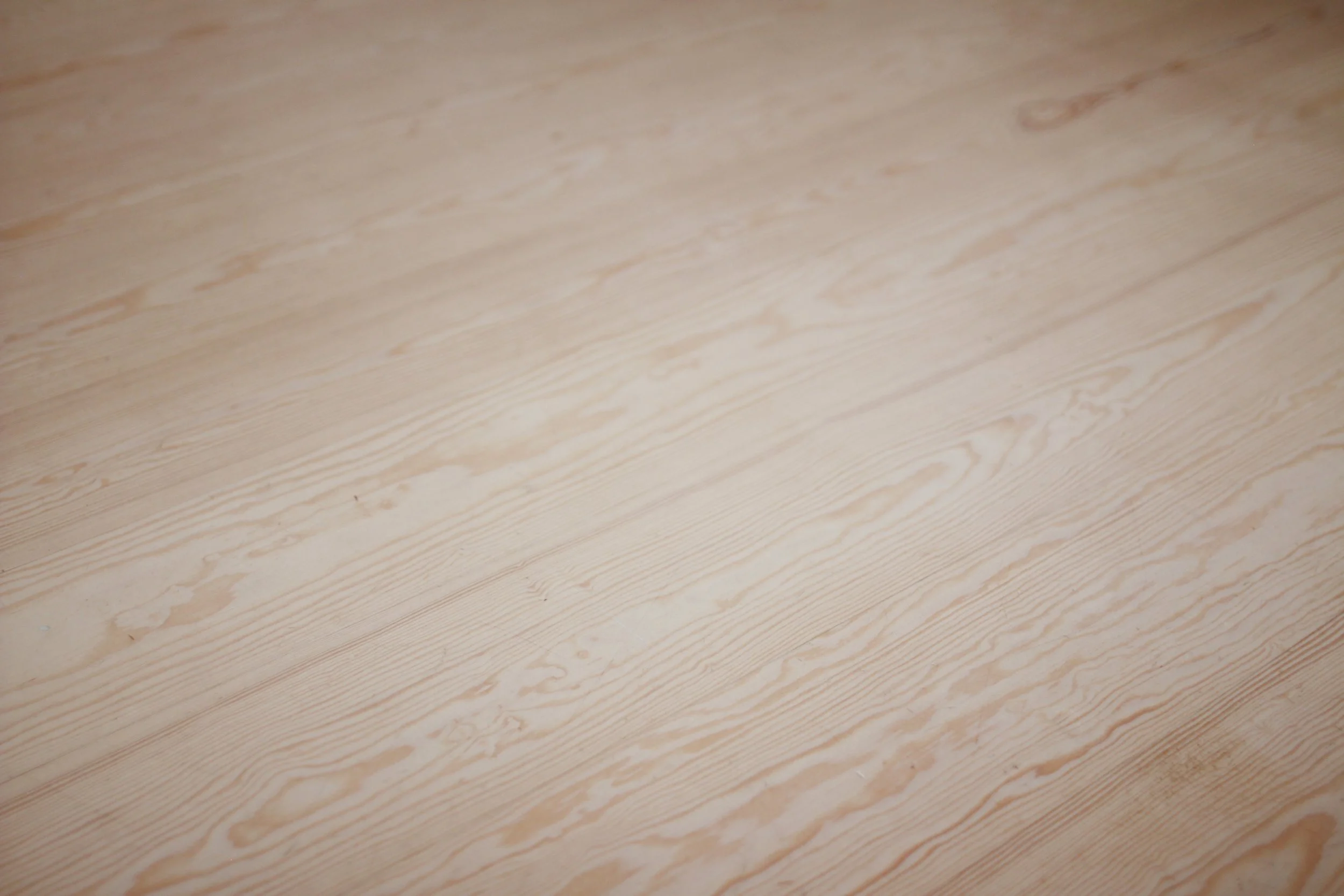
Steep Hill Heirloom Sleeping Cabin: Clear grade, solid, red pine flooring is used throughout the main floor and loft space (expect for in the bathroom, shown above).
12. Light Wood Flooring
Light-toned wood reflects daylight and reduces visual contrast at the floor plane. Using the same flooring throughout multiple rooms reinforces continuity and avoids visual breaks that can fragment a small plan.
In the Steep Hill Heirloom Sleeping Cabin:
Clear-grade solid pine flooring was used throughout the main floor and loft. The bright tone keeps the space feeling light, while the clear grade reduces knots and visual variation.
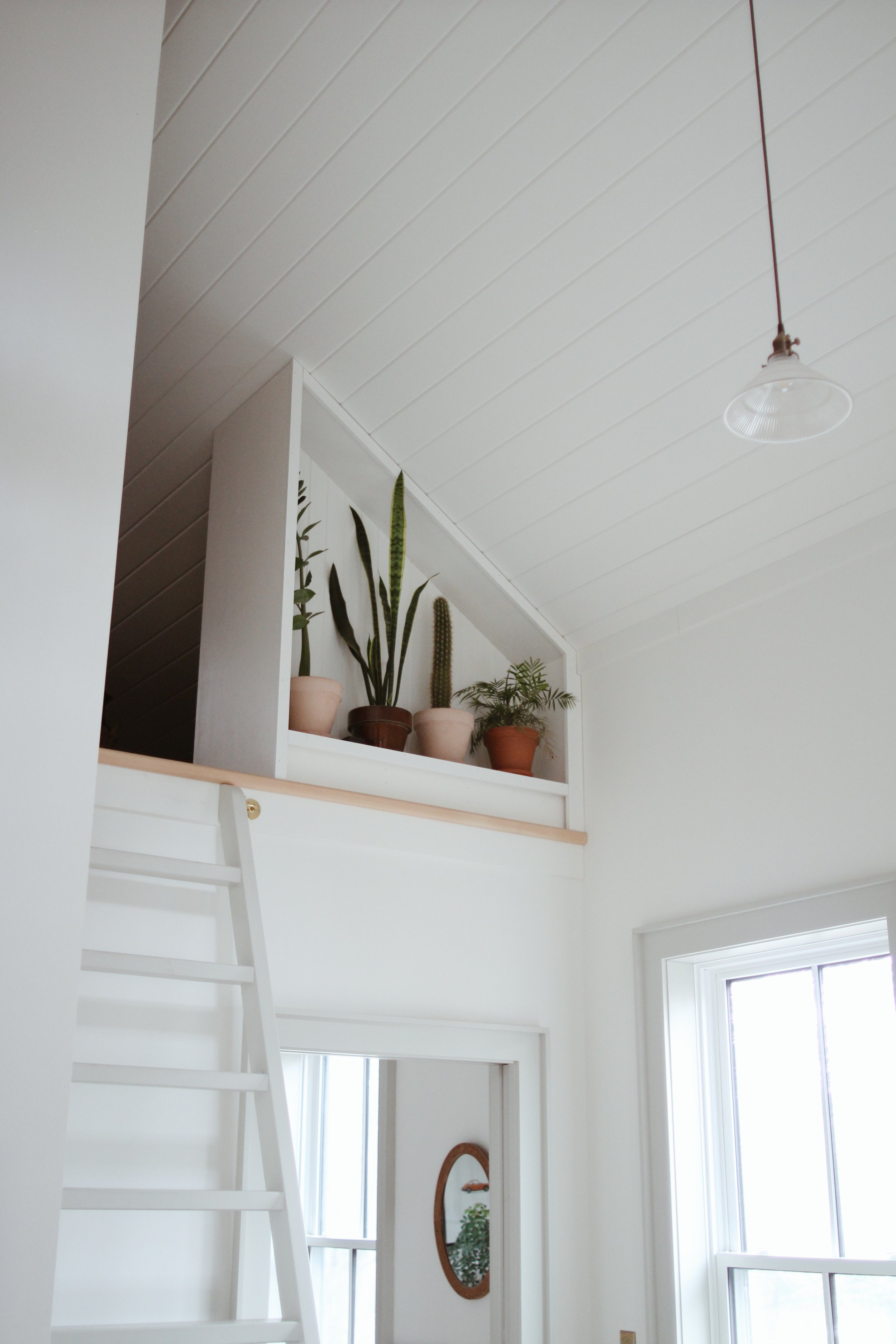
Steep Hill Heirloom Sleeping Cabin: A ladder leads up to the loft space, separated from the main living room by a custom built plant display wall. The tonal upper wall, trim and ceiling colour can be seen clearly, demonstrating the bright and open atmosphere this creates with an emphasis on texture.
13. Tonal Wall and Ceiling Colour
Using the same or closely related colours on walls and ceilings softens edges and reduces contrast. This allows the room to read as a single volume rather than a collection of separate surfaces.
In the Steep Hill Heirloom Sleeping Cabin:
The same warm white was used on the upper walls, ceiling trim, and the tongue-and-groove ceiling cladding. The result is calm and unified, placing emphasis on texture and clean shadow lines rather than hard transitions.
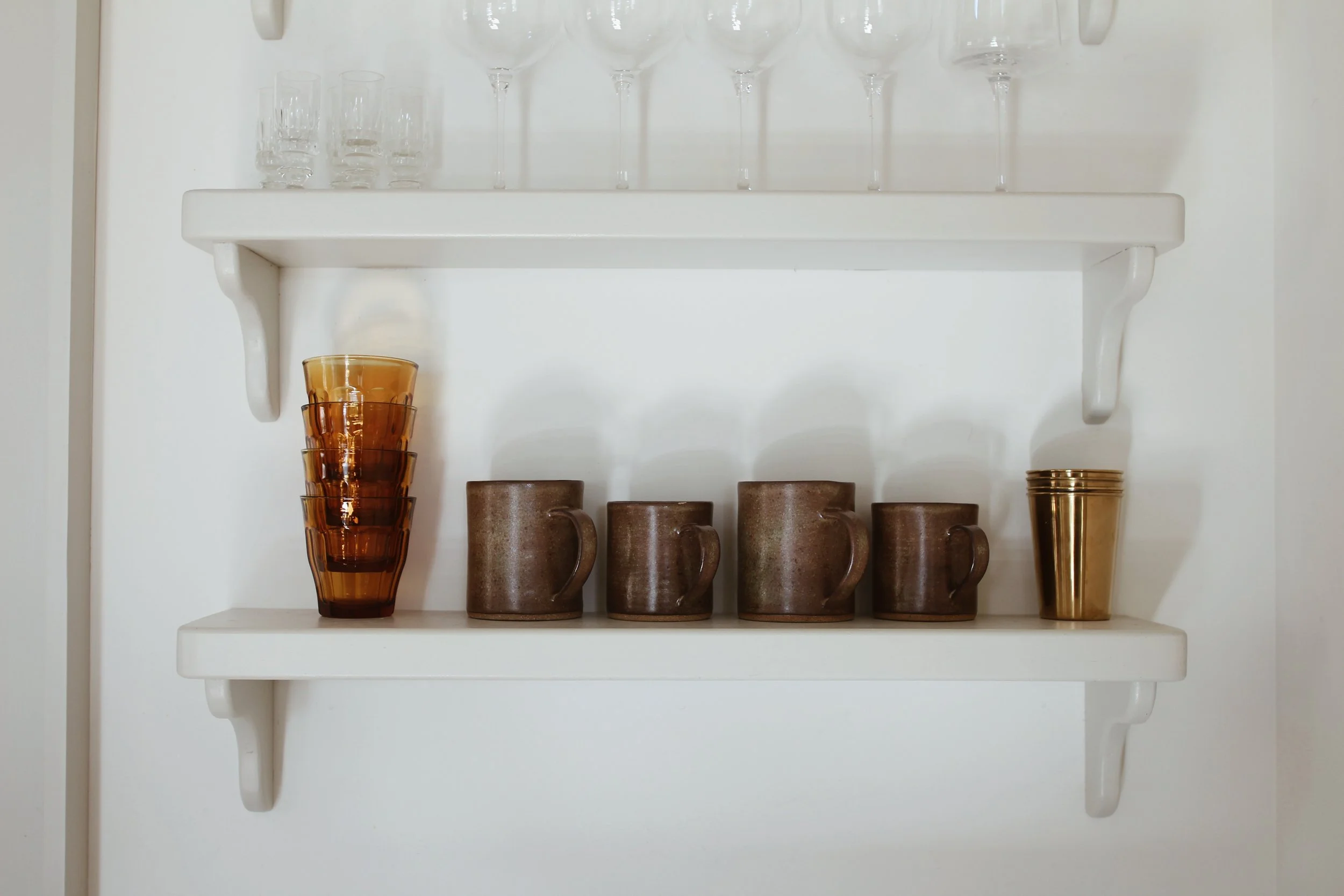
Steep Hill Heirloom Sleeping Cabin: A set of three custom-made floating shelves above the kitchenette counter offer storage for mugs and glassware on an open expanse of wall.
14. Creative Storage
Vertical storage strategies use wall height rather than floor area. When storage is deliberate and well placed, it supports daily use without encroaching on circulation or visual clarity.
In the Steep Hill Heirloom Sleeping Cabin:
Open shelves beside the kitchenette windows provide storage for glassware and preserves. A cabinet above the stacked laundry accommodates overstock bins. In the loft, a two-sided storage unit houses books on one side and plants on the other, turning what could have been a simple barrier into useful, integrated storage.
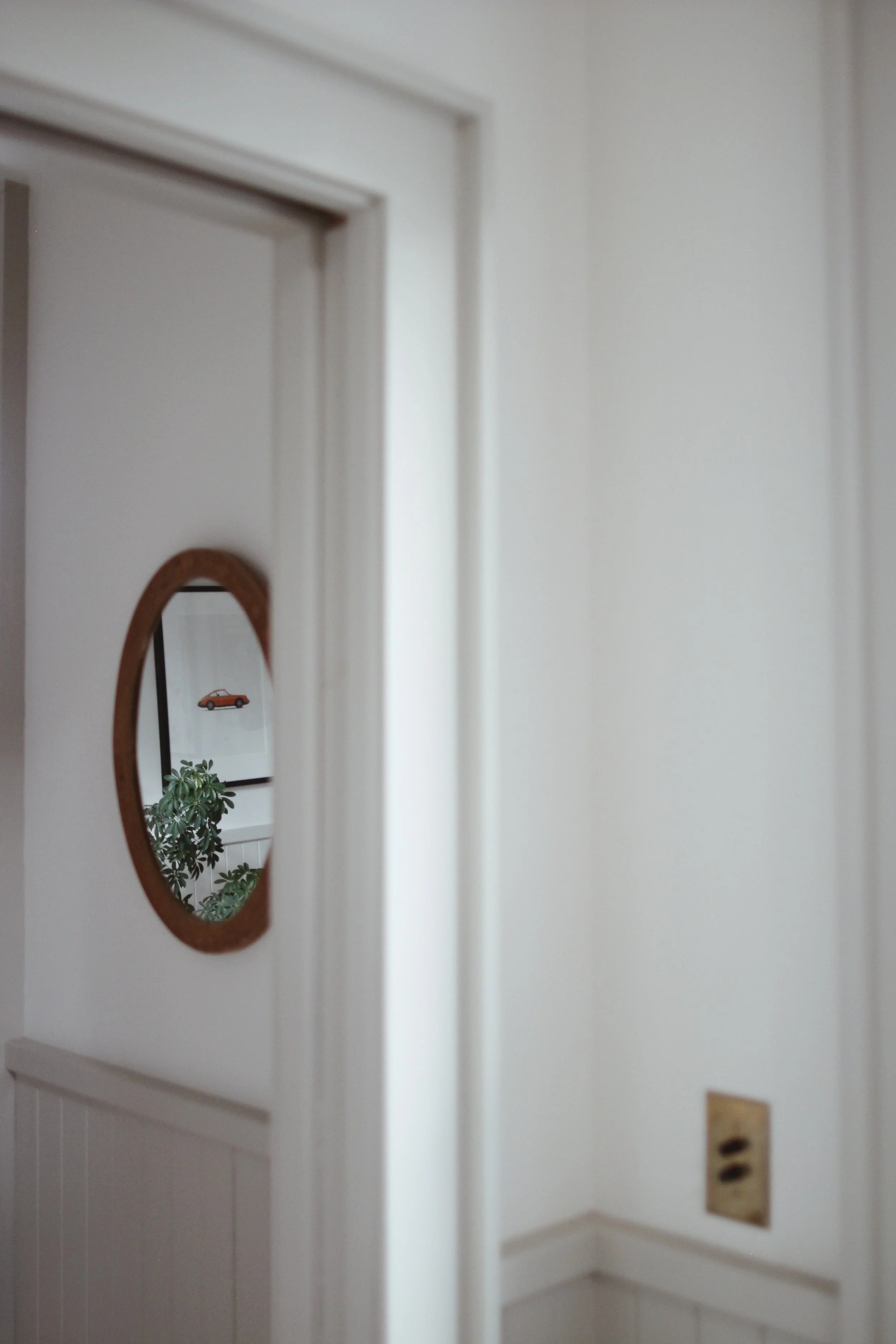
Steep Hill Heirloom Sleeping Cabin: A vintage mirror on the wall inside the main floor bedroom/office reflects a print of an orange Porsche 911 and the tall leafy stems of a potted plant.
15. Strategically Placed Mirrors
Mirrors reflect light and extend sightlines, making rooms feel deeper than their actual dimensions. When aligned with windows, artwork, or views, they amplify both brightness and interest.
In the Steep Hill Heirloom Sleeping Cabin:
A vintage mirror is positioned just inside the bedroom door opening. It reflects artwork and a portion of the bedroom, creating depth and a shifting view depending on where you stand.
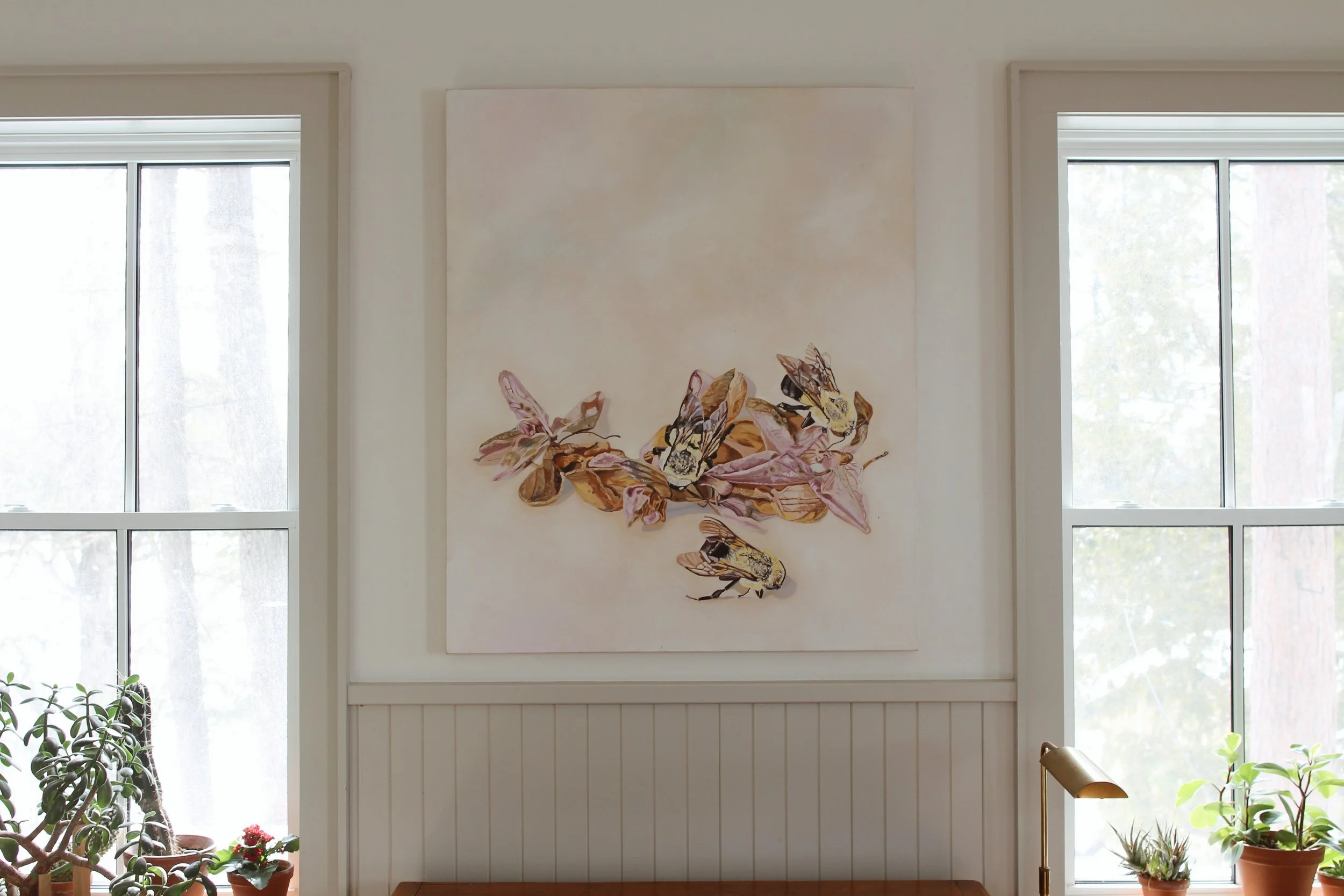
Steep Hill Heirloom Sleeping Cabin: A large acrylic artwork of bees collecting pollen by Anna Kovler sits between the tall windows in the main living area.
16. Large Format Artwork
A single large piece of art can carry presence without the visual busyness of multiple small elements. This reduces visual noise and gives the eye a clear focal point, helping the space feel composed rather than crowded.
In the Steep Hill Heirloom Sleeping Cabin:
Wall space between two large windows provided an ideal location for a large canvas. Its palette supports the room and adds interest without overpowering the architecture.
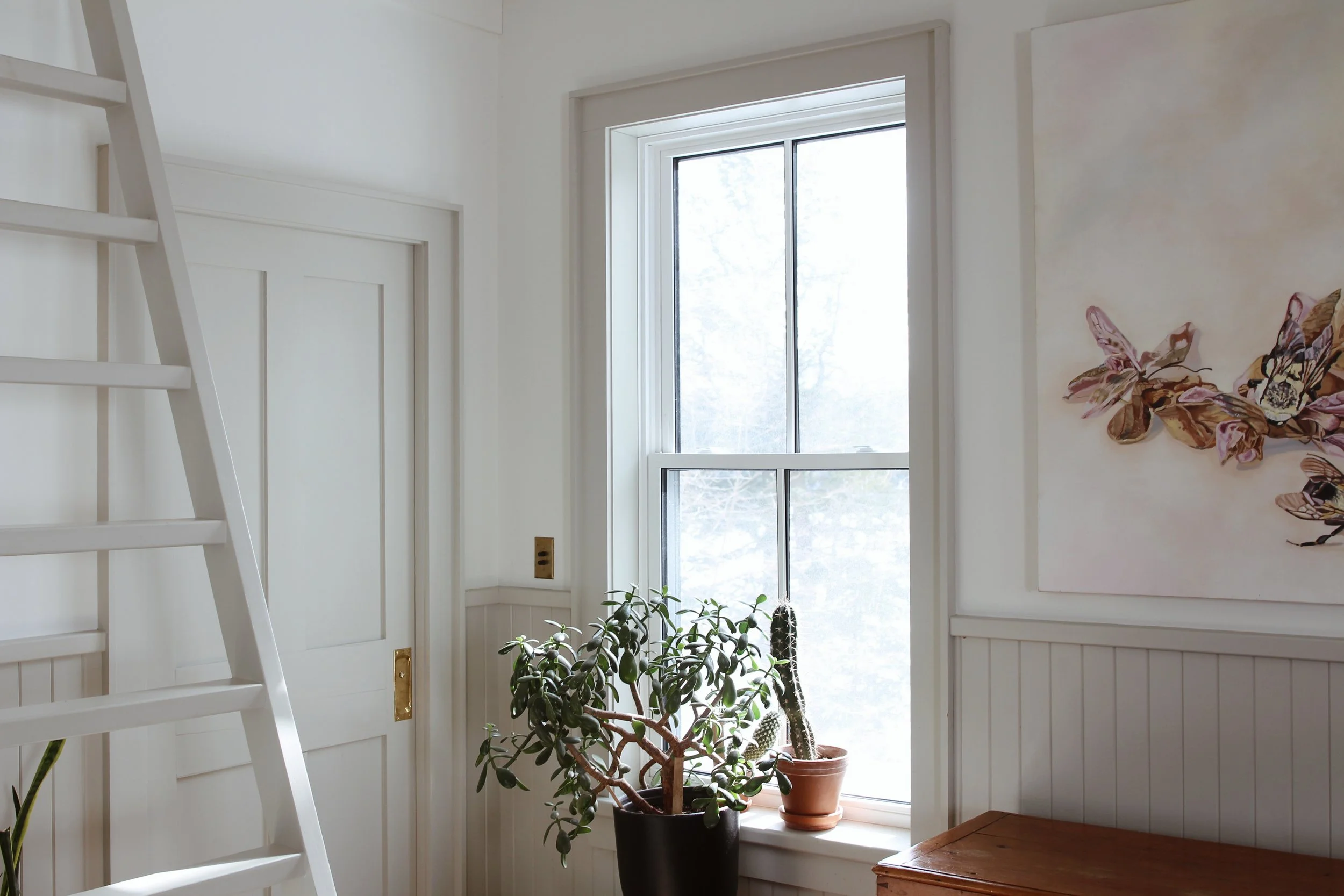
Steep Hill Heirloom Sleeping Cabin: Neutral trim colour provides a soft contrast to the warm white walls throughout the cabin interior. Green plants and wood tones in the pine flooring and furniture bring natural texture and interest.
17. Limited Palette
A restrained palette of paint colours repeated throughout the home ties spaces together visually. This continuity allows rooms to flow into one another and reinforces the impression of a larger, unified interior.
In the Steep Hill Heirloom Sleeping Cabin:
Window casing, wainscoting, door trim and doors are all painted the same soft neutral tone throughout. A deep brown used on the kitchenette cabinetry is also repeated on the office desk and bookshelf, creating a subtle visual thread between zones.
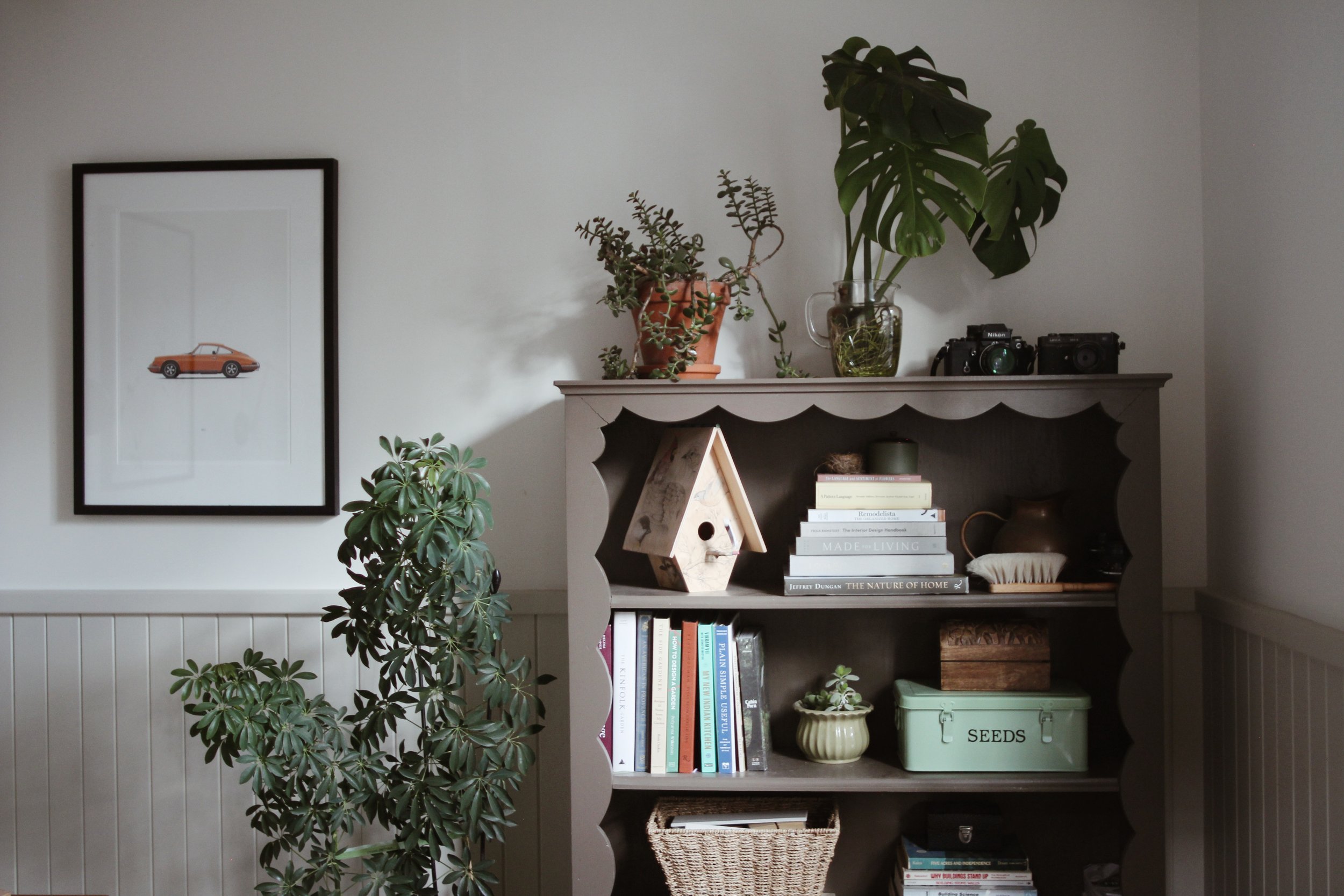
Steep Hill Heirloom Sleeping Cabin: Office bookshelf painted brown to connect to the kitchenette cabinetry with an eclectic array of books, baskets, tins, plants and artifacts styled on its shelves.
18. Assign a Space for Everything
Dedicated storage prevents clutter from accumulating in circulation and living zones. When each item has a designated place, rooms stay tidy, functional, and easier to live in over time.
In the Steep Hill Heirloom Sleeping Cabin:
Each functional zone includes storage suited to its use. The kitchenette has undercounter drawers and open shelving, the bathroom includes a recessed medicine cabinet and undercounter storage, and the living room uses a vintage trunk for blankets and entertaining supplies. The office has dedicated shelving and the loft houses vintage dressers, and a built-in bookcase for games and guest needs.
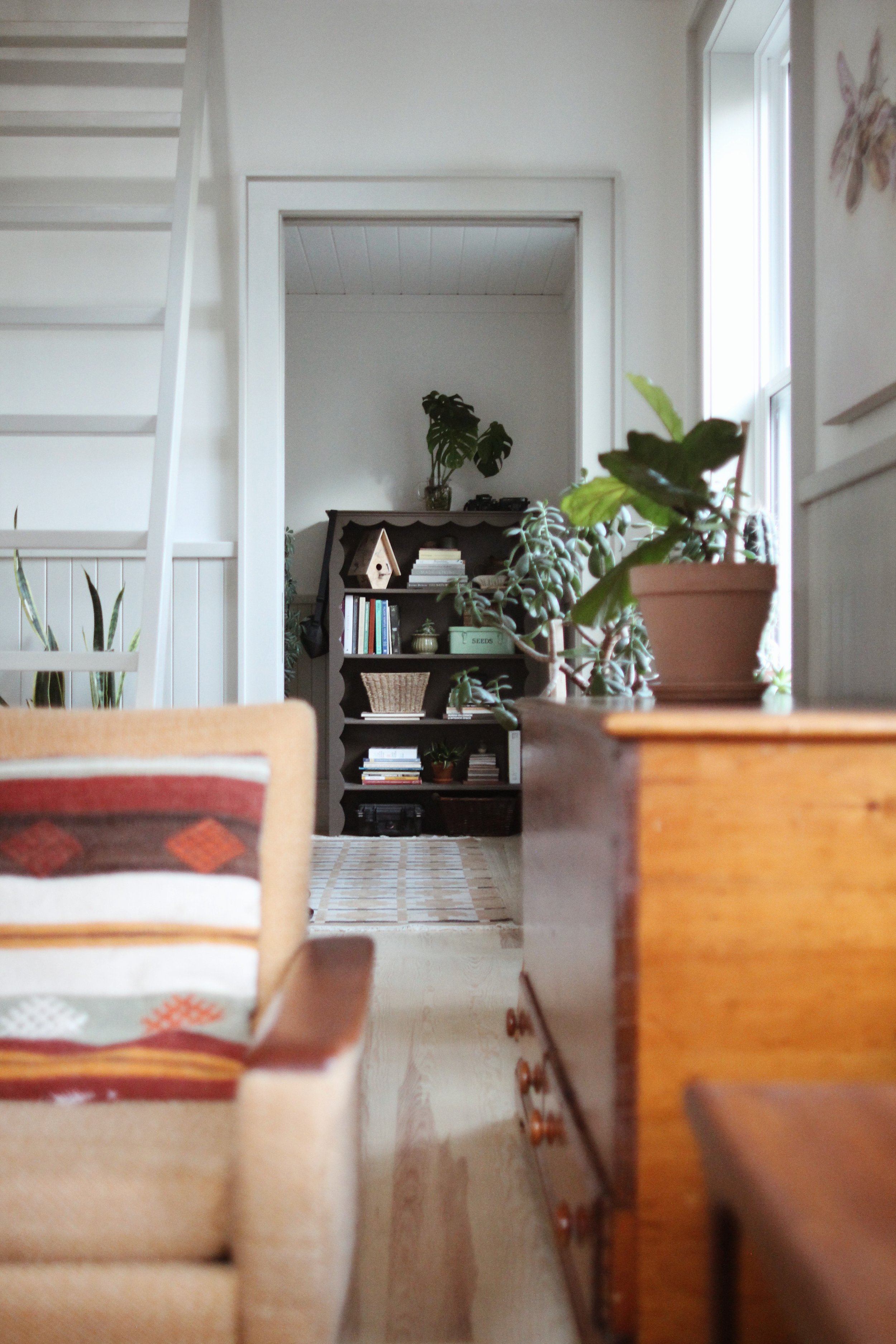
Steep Hill Heirloom Sleeping Cabin: Sight line from the living room couch through an open doorway into the main floor bedroom/office.
19. Embrace Sightlines to Different Zones
Allowing views between adjacent spaces increases perceived depth. Even modest glimpses into another room help a small home feel layered rather than compartmentalized.
In the Steep Hill Heirloom Sleeping Cabin:
Sightlines between rooms were treated as part of the design. Finishes and furnishings visible through open doors were selected deliberately so that adjacent spaces read as an extension of the room you are in, not a disconnected zone.
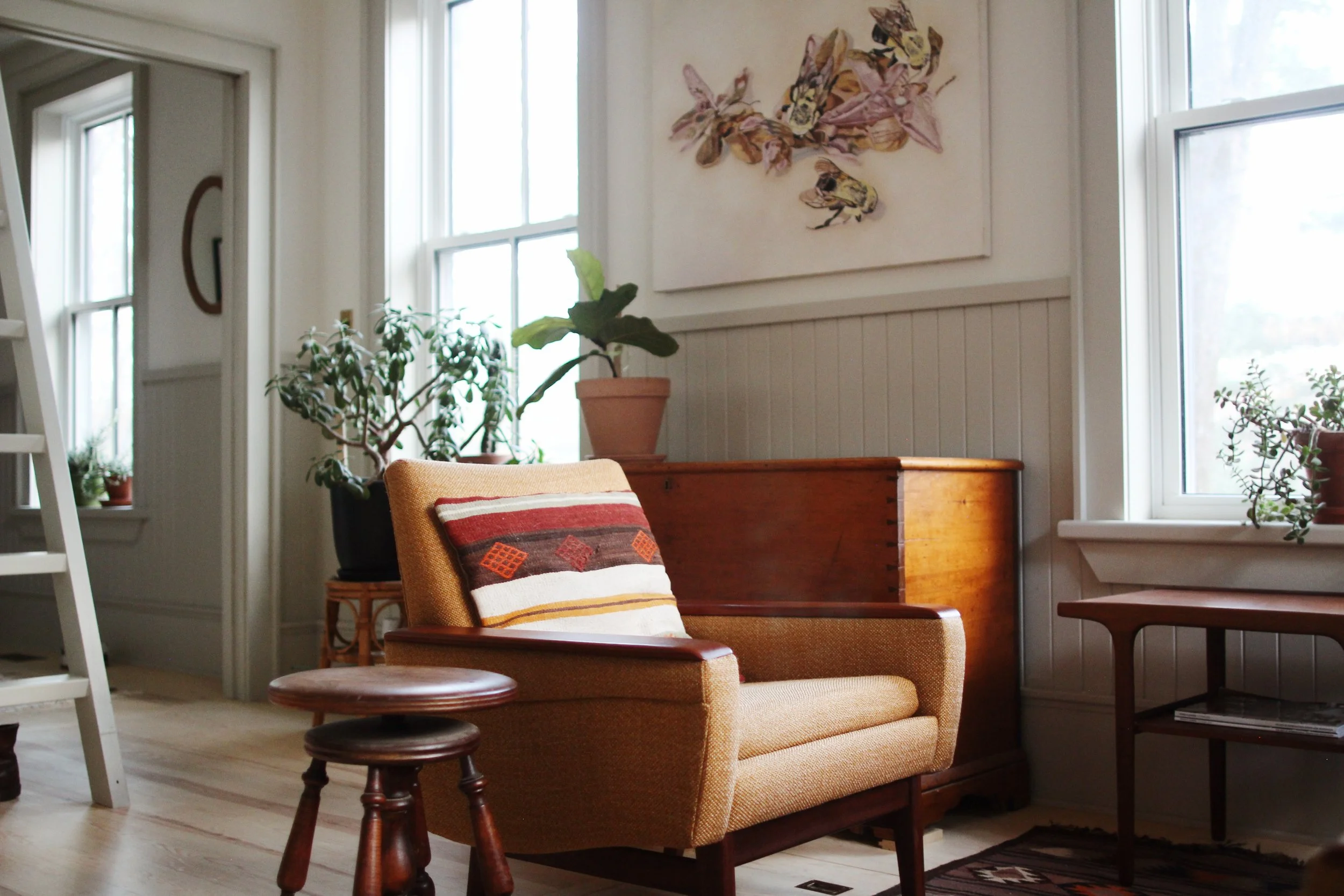
Steep Hill Heirloom Sleeping Cabin: Living room featuring an original R.Huber chair with a vintage kilim pillow, rug and a Victorian turned wood stool. Vintage pine trunk, teak side table and rattan stool in the background.
20. Keep Circulation Open
Minimizing hallways and avoiding unnecessary partitions ensures that circulation contributes to the overall volume of the home. This maximizes usable area and supports intuitive movement.
In the Steep Hill Heirloom Sleeping Cabin:
Circulation is integrated into the main living area rather than separated into dedicated corridors. This helps the cabin feel open and reduces the sense that space is being consumed by pass-through zones.
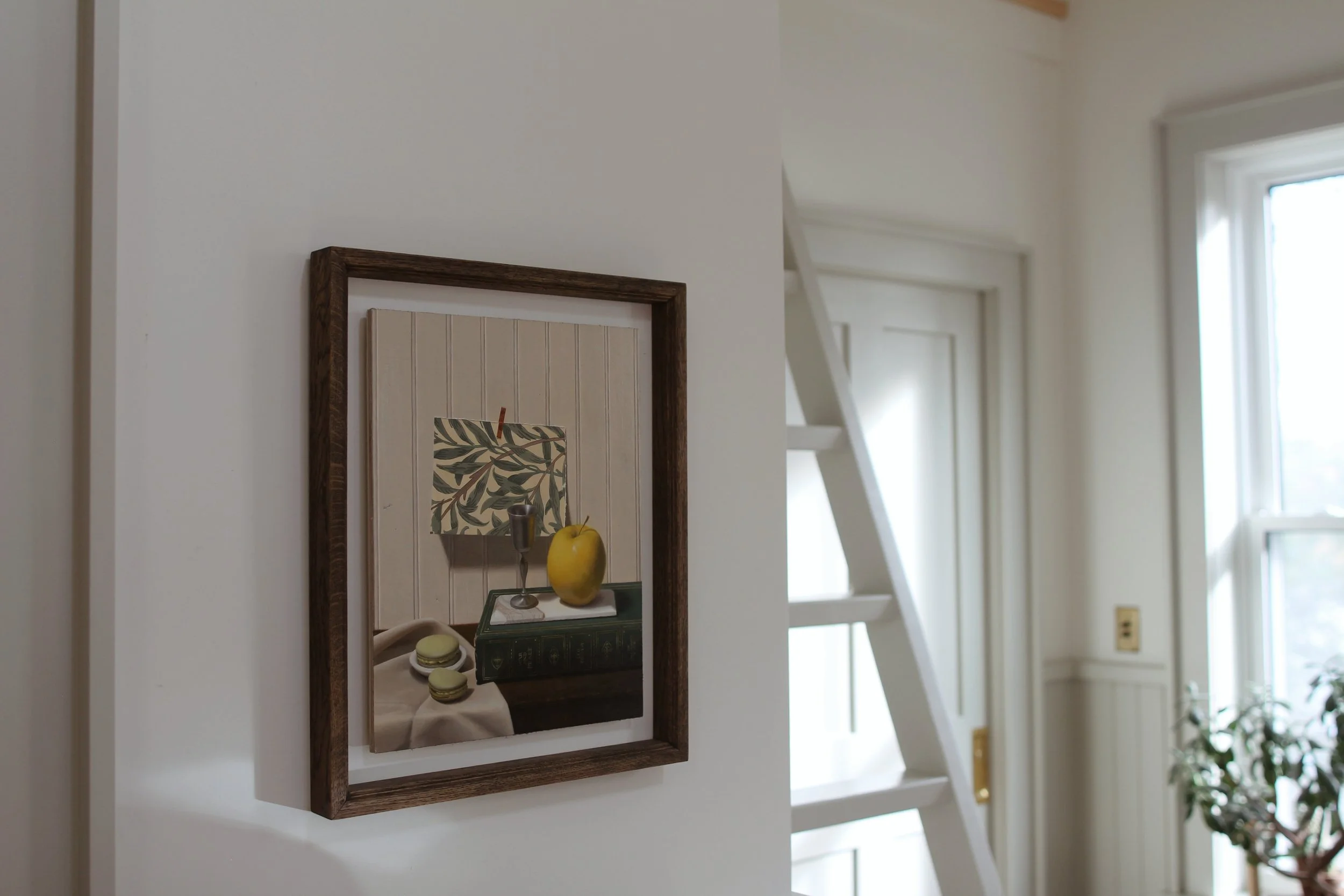
Steep Hill Heirloom Sleeping Cabin: Still Life Oil Painting by Esther Clark in a custom stained oak frame hangs on the central wall beside the ladder to the loft and the door to the main floor bedroom/office.
A spacious small home is best achieved through architectural choices that are then supported with interior design decisions. Many of these choices are best made early, when proportion, structure, openings, and circulation are still flexible, but the later finish and furnishing choices will determine how the space ultimately reads. The goal isn’t actually to make a small home feel big. The goal is to make it feel complete, calm, and intentional. Careful consideration of these elements is where heirloom quality lives: in durable decisions, consistent detailing, and a level of clarity that holds up not just for a season, but for decades.
for MORE ON small homes and heirloom cottages WE INVITE YOU TO
In many ways, building a small home is exactly like building a conventional home. The difference comes down to scale.